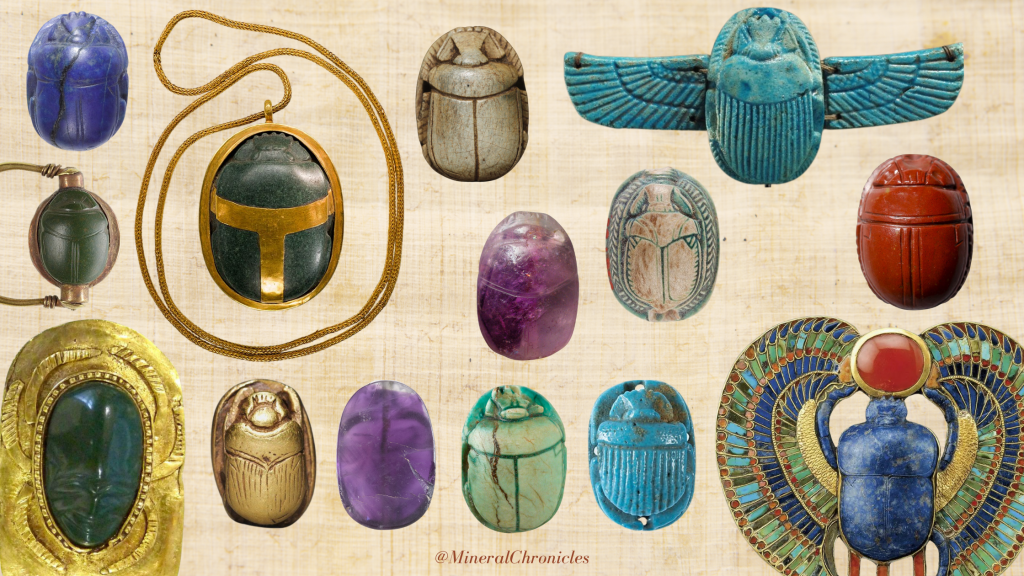
Scarab amulets were extremely popular in ancient Egypt, serving as powerful symbols of rebirth, protection, and the eternal cycle of the sun. Crafted from a diverse array of minerals and materials, these tiny masterpieces were often beautifully decorated to reflect their spiritual significance. In this blog post, we will discover 10 remarkable stones and materials that ancient artisans chose to bring these sacred objects to life.
What are Scarab Amulets?
Scarab amulets were modelled after the sacred dung beetle (Scarabaeus sacer), believed by the ancients to push the sun across the sky, just as the beetle rolls its ball of earth.
Originating around 2500 BCE, scarabs became one of the most widely produced and used objects in ancient Egypt. From 2200 BCE onward, they spread far beyond Egypt, from Syria to Spain, and were eventually manufactured throughout the Mediterranean. Initially created as simple amulets for the lower classes, they evolved into universal objects valued by all levels of society across the ancient world.
The scarabs were used in different ways including:
- The scarab amulets: the most common type, being incorporated in jewellery and worn as amulets for protection against evil.
- The heart scarab: used in funerary rituals often placed on mummies to guide and guard them in the afterlife.
- The commemorative scarab: Scarabs, whose undersides featured hieroglyphic text describing royal achievements such as architectural projects.
- The seal scarab: used as seals in personal or administrative life.
1. Libyan Desert Glass
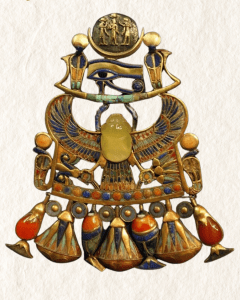
Among the treasures discovered in Pharaoh Tutankhamun’s tomb was several scarab amulets crafted from a variety of materials. One stands out in particular: a striking scarab set in his pectoral, carved from a translucent, canary-yellow stone known as Libyan Desert Glass. This artifact is especially significant, as it is currently the only known ancient example of an amulet made from this extraordinary material.
A Mineralogist’s Note: This rare gem is found only in the eastern Sahara, near the borders of modern-day Libya and Egypt. Libyan Desert Glass is a natural glass formed around 28.5 million years ago, when a meteor impact generated temperatures exceeding 1700 °C, melting desert sand into radiant, golden glass.
2. Lapis Lazuli
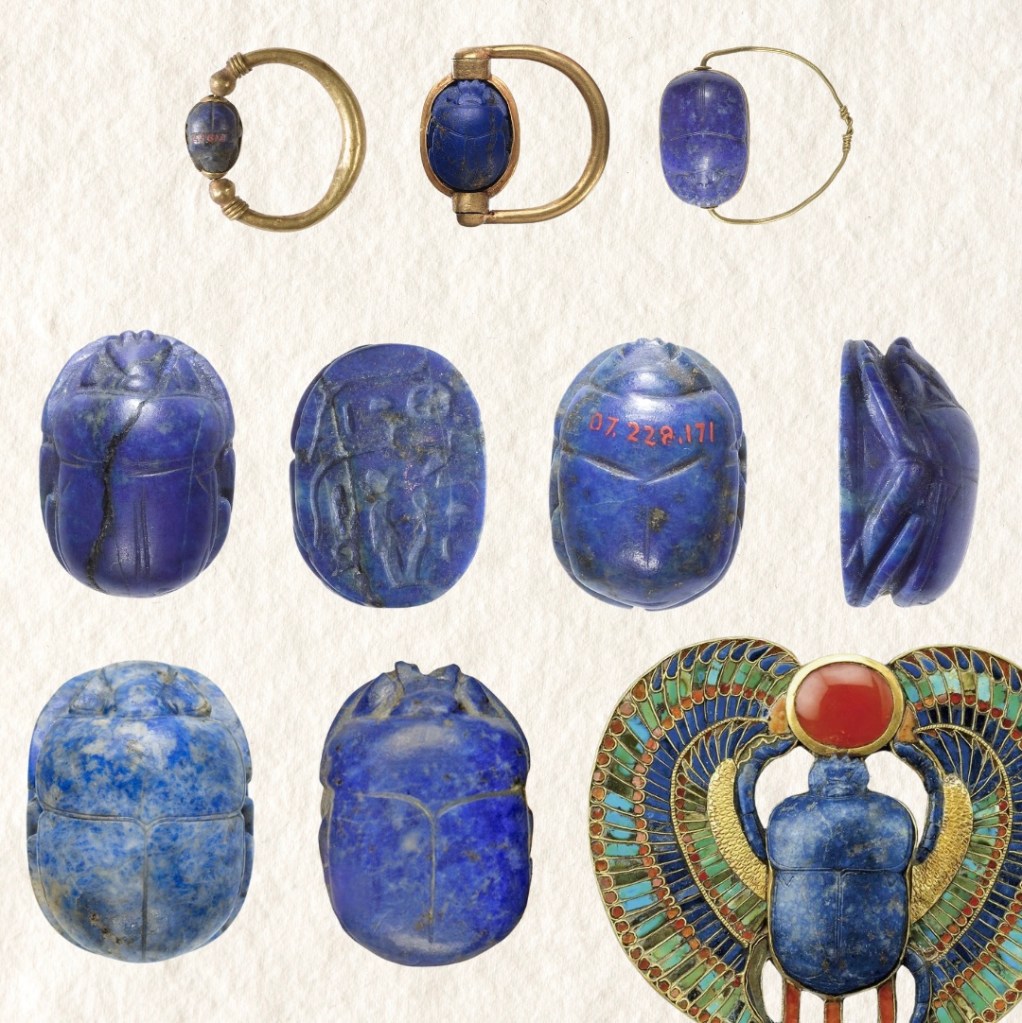
Lapis lazuli is a semi-precious stone renowned for its deep, opaque blue colour. It has been used in jewellery and decorative arts for over 7,000 years. The primary source of lapis lazuli in antiquity was the Badakhshan mines in present-day Afghanistan, which supplied the gemstone to several ancient civilizations, including Mesopotamia and Egypt.
In ancient Egypt, lapis lazuli was one of the most highly prized materials, especially among the elite. Artifacts crafted from the stone are frequently found in the tombs of high-status individuals. One of the most notable examples is the tomb of King Tutankhamun, which contained numerous lapis lazuli items, including the inlays in his iconic death mask.
A Mineralogist’s Note: Lapis lazuli is a metamorphic rock composed mainly of the mineral lazurite, with additional components such as calcite and pyrite.
3. Gold
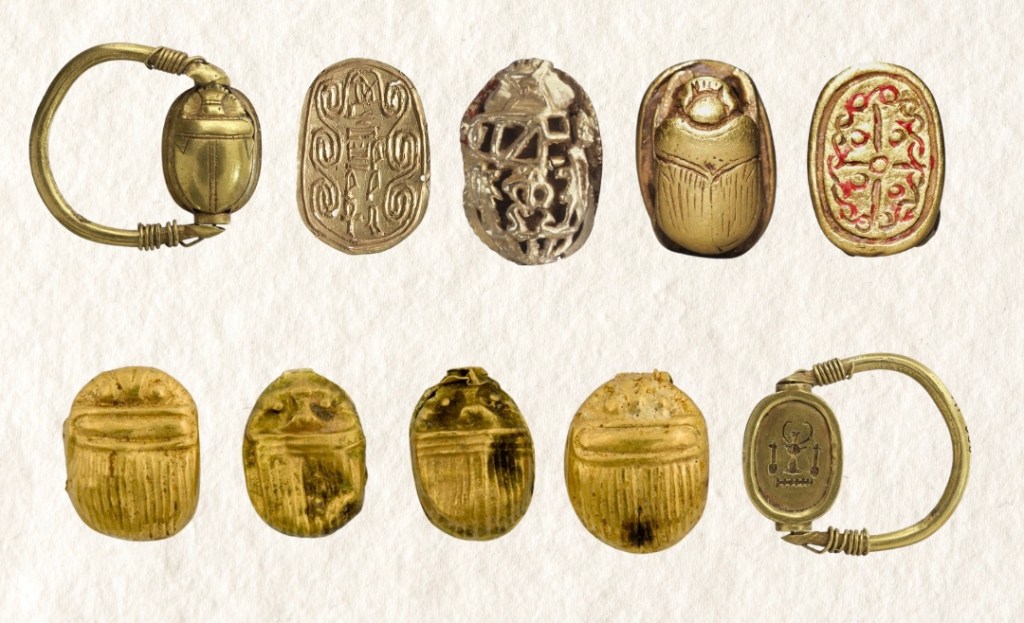
Gold, known as “nub” in ancient Egyptian, was one of the most valued metal in the ancient world. It symbolized the power of the sun god Re and played a central role in the religious, social, and economic life of ancient Egypt. Worn by pharaohs and the elite, gold jewellery and adornments expressed both divine connection and social status.
Although Egypt was rich in gold, particularly from the eastern deserts of Upper Egypt, many ancient gold artifacts have been lost to time. Much of it was melted down or looted over the centuries. The gold pieces we know today survive largely by chance, uncovered through excavations, or preserved in tombs that escaped plunder.
A Mineralogist’s Note: Gold is a native element that appears opaque with a metallic golden yellow colour, it is highly malleable and usually found in pure form. It is often found in hydrothermal veins with quartz and sulphides.
4. Amethyst
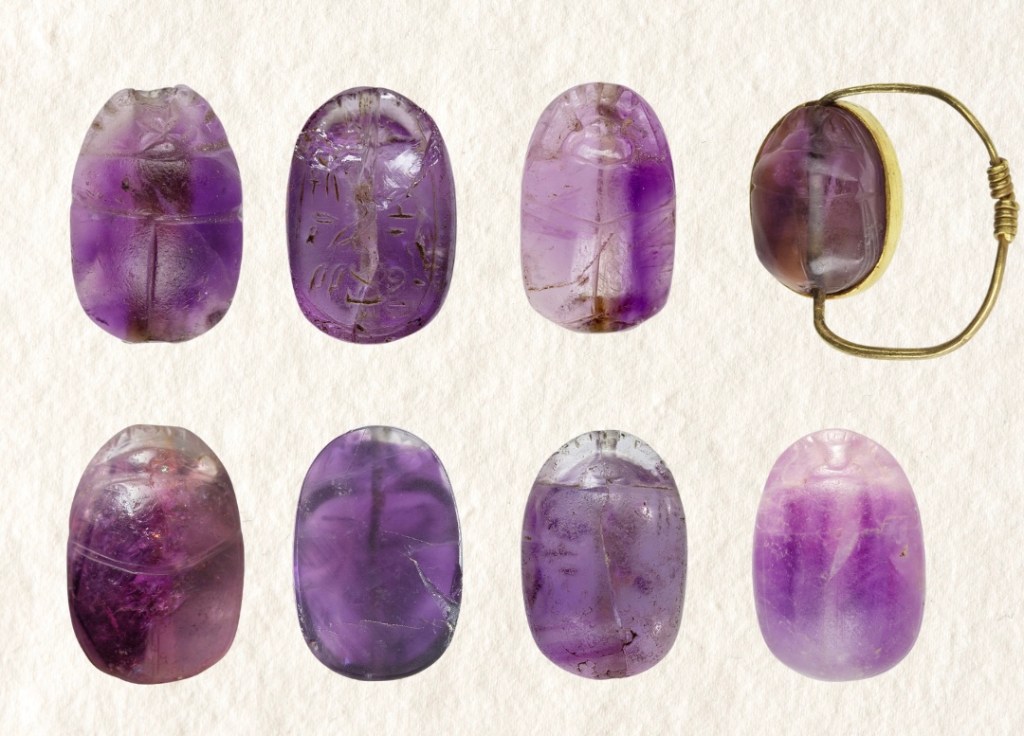
Common today, Amethyst was a rare and precious gemstone in ancient Egypt. It was carved into amulets, seals, and statues reserved for the elite and royalty. A notable example is the amethyst scarab bracelet found among the treasures of King Tutankhamun. The rarity of the mineral was due to limited access to its ancient sources in the Eastern Desert, the immense and dangerous logistical effort required for mining, and the tight royal control over its extraction and distribution.
A Mineralogist’s Note: Amethyst is a crystalline mineral and a violet variety of quartz. It is found in geodes and veins within igneous and metamorphic rocks. Its characteristic purple colour is due to iron impurities and natural irradiation within its crystal lattice.
5. Steatite
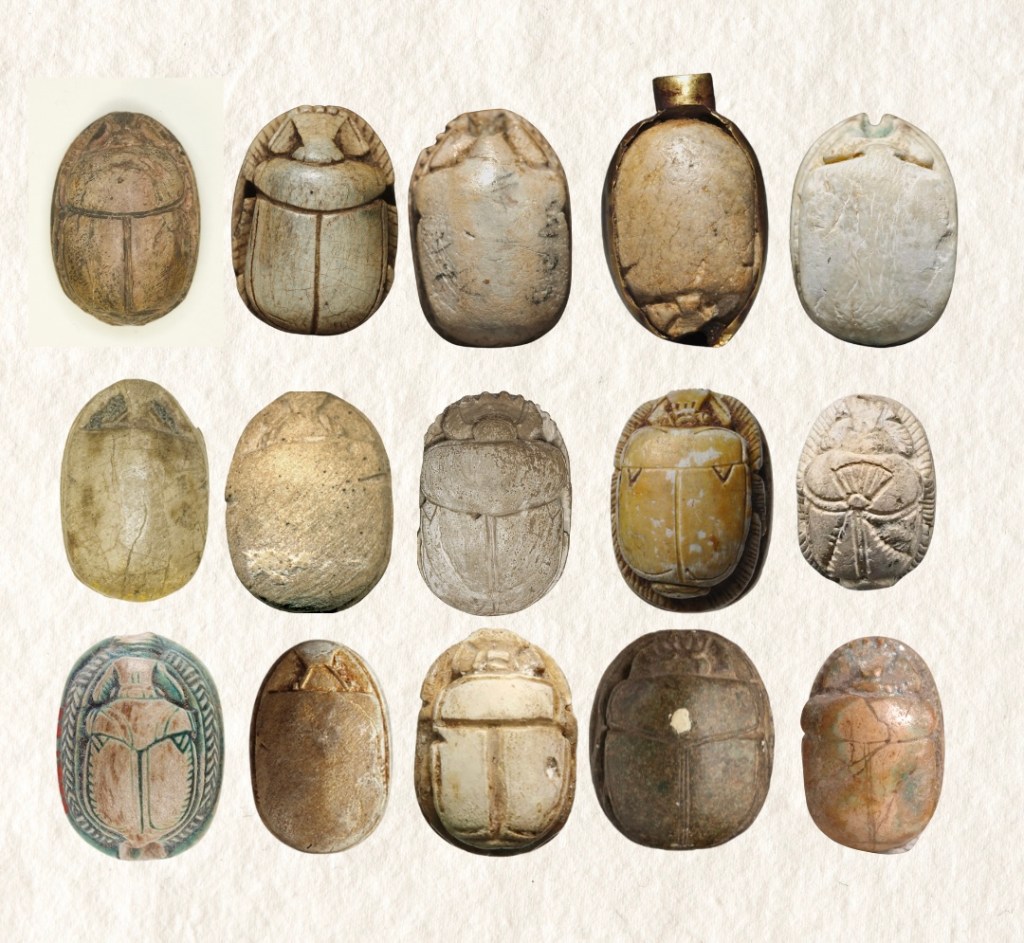
Also known as soapstone, steatite was the most used material for crafting scarab amulets in ancient Egypt.
A Mineralogist’s Note: Steatite is a metamorphic rock from the talc-schist type, composed primarily of talc. The softness of the rock makes it easy to shape, allowing for the creation of complex and ornate designs. After the scarabs were shaped, they were coated in a blue or green glaze and fired at high temperatures. This process hardened the objects and gave them a glossy surface mimicking the appearance of more precious stones.
6. Faience
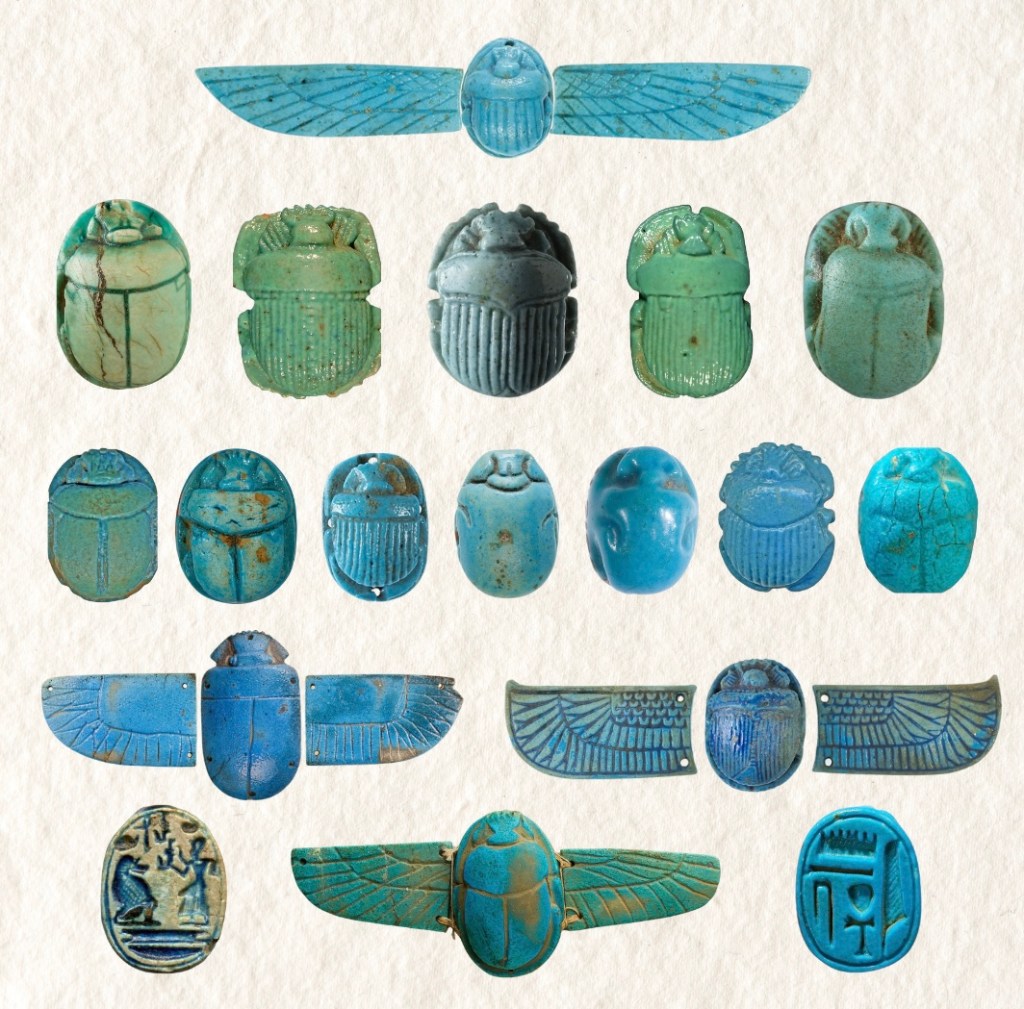
Faience was an incredibly important and widely used ceramic in ancient Egypt, especially for crafting scarab amulets and magical objects. This bright, glassy material often appeared in stunning turquoise blue or green, colours deeply symbolic of life and regeneration. It’s believed faience was developed to imitate highly prized and rare blue stones like turquoise and lapis lazuli, making their beauty and spiritual significance accessible to a broader population.
A Mineralogist’s Note: Egyptian faience is a non-clay ceramic, primarily made from finely ground quartz or sand mixed with alkali salts, lime, and copper-based colorants. When fired, it uniquely self-glazes, creating its characteristic glossy finish.
7. Carnelian
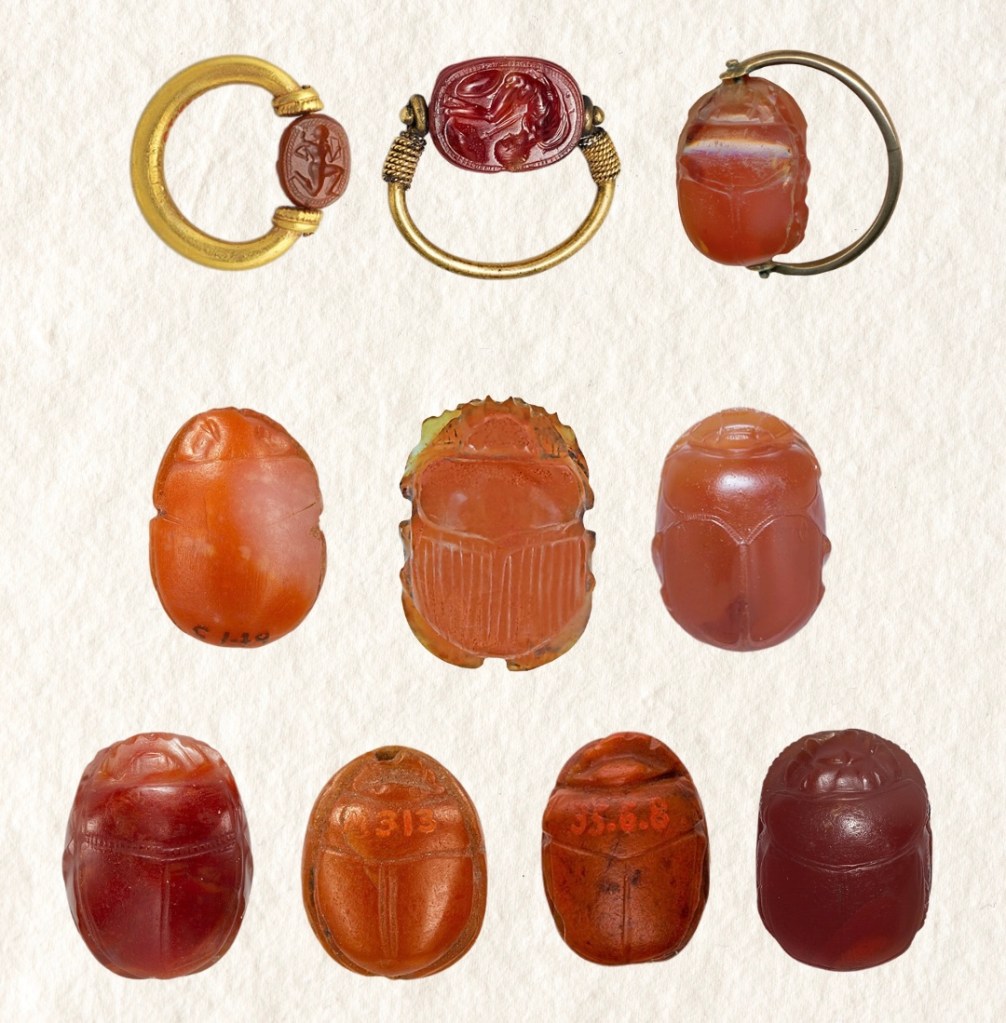
In ancient Egypt, carnelian was highly significant, particularly in a religious context. Its red colour, associated with blood and life. The goddess Isis used carnelian to protect the deceased on their journey to the afterlife, linking it strongly with rebirth and eternal life. Carnelian also conveyed social rank, with architects wearing it to denote their esteemed position in society.
A Mineralogist’s Note: Carnelian is a translucent to opaque variety of chalcedony, which is a microcrystalline form of quartz. Its characteristic orange to reddish-brown colour is due to the presence of iron oxide impurities. This gemstone forms over long periods, typically as secondary deposits in cavities or fractures within sedimentary rocks like cherts and agates. Silica-rich fluids seep into these rocks, and as the silica precipitates and crystallizes, carnelian gradually forms.
8. Serpentinite
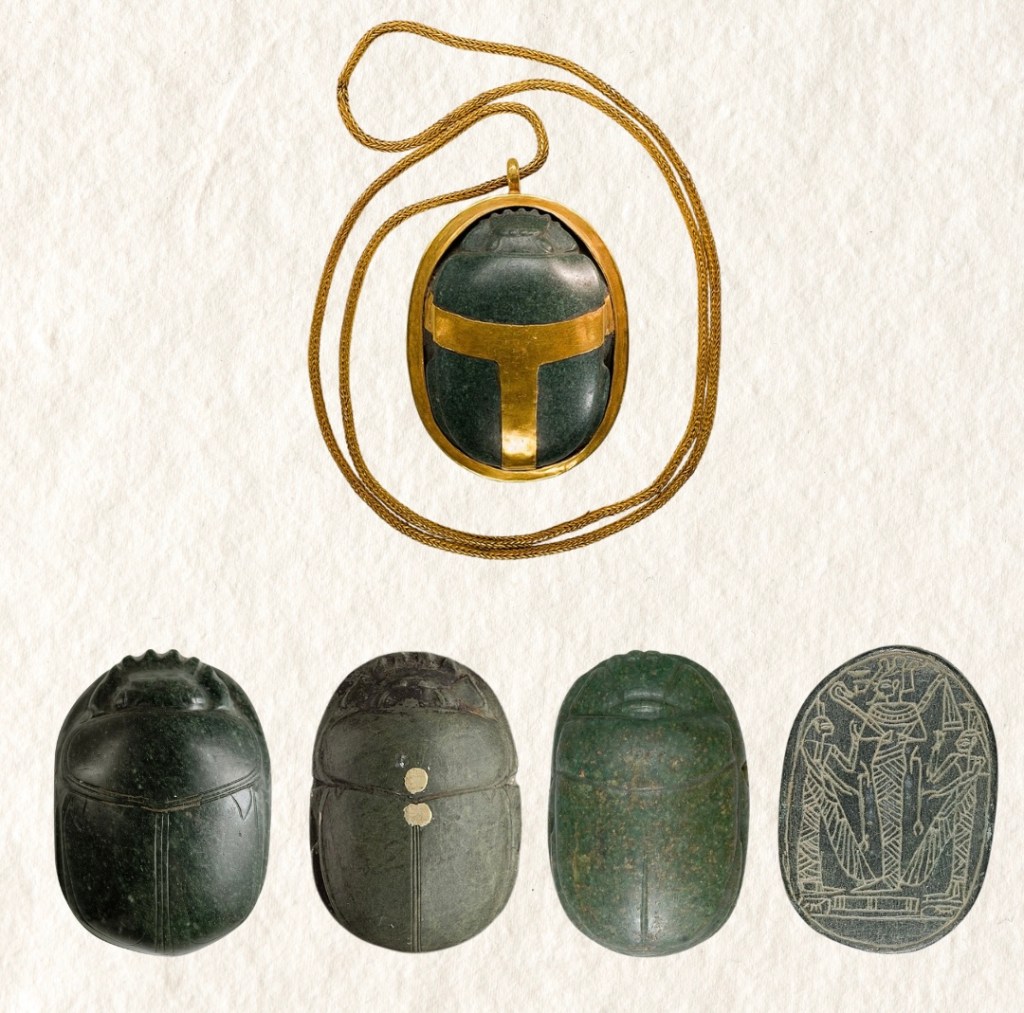
The ancient Egyptians used serpentinite, a rock with a range of dark green and yellow hues, as a valuable material since ancient times. They carved it into everything from grand statues and architectural elements to smaller, meaningful amulets, including scarabs. An iconic example is the Hatnefer’s heart scarab, which was found in the tomb of this ancient noblewoman. This particular scarab was inscribed with a chapter from the Book of the Dead, a collection of spells designed to guide the deceased safely through the underworld.
A Mineralogist’s Note: Serpentinite is a metamorphic rock composed of the mineral serpentine and appear in dark green and yellow colours. It often has a smooth, slightly waxy feel, making it pleasant for carving.
9. Obsidian
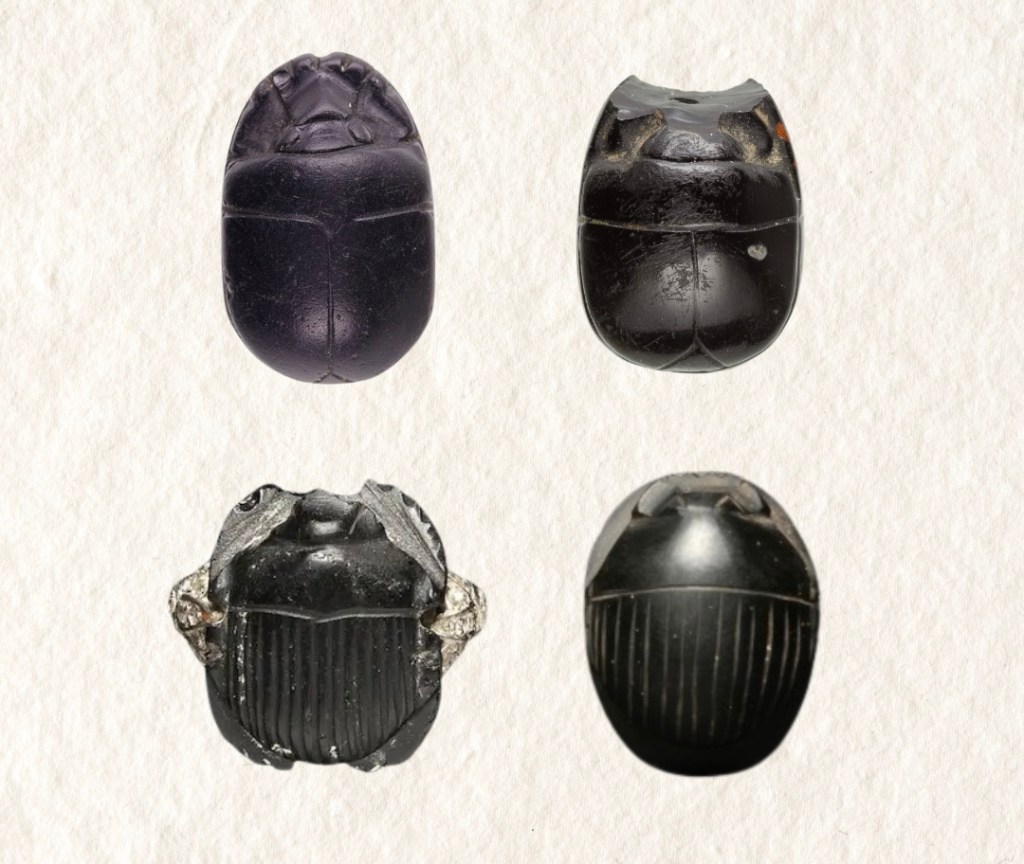
The ancient Egyptians highly valued obsidian, a striking material primarily imported from distant lands like Ethiopia. It was used for sharp tools, statues, mirrors, and amulets including scarabs. An example is a black obsidian scarab carved with a wish formula, believed to provide its owner with the protection of Horus (The Walter Art Museum).
A Mineralogist’s Note: Obsidian is a natural volcanic glass that form when lava solidify so quickly that crystals do not have the time to form. They appear mostly black, though the presence of hematite, however specimen of red and brown can be found. The glass has a characteristic conchoidal fracture that gives it extremely sharp edges.
10. Jasper
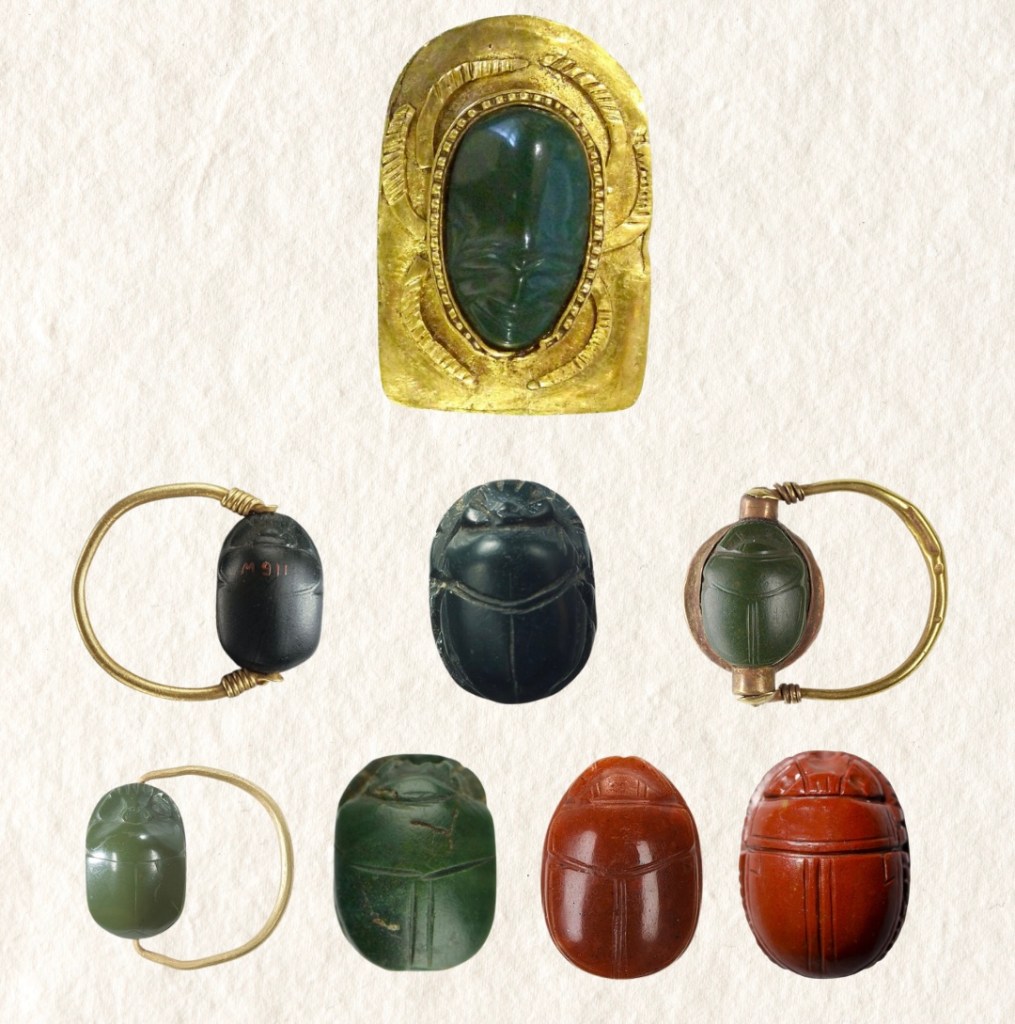
Jasper was a favoured material in ancient Egyptian amulet-making, prized for its vibrant red, green, or yellow hues. Scarabs made from jasper were often included in funerary contexts or worn for their healing and protective properties. An iconic example is the Scarab of Sobekemsaf II made of green jasper and gold from the 17th Dynasty.
A Mineralogist’s Note: Jasper is an opaque variety of chalcedony composed of microcrystalline quartz. Its colour comes from iron oxides or other mineral impurities, and it typically forms as a result of sedimentary or volcanic processes.
Conclusion: Scarabs Through a Mineralogist’s Eyes
The materials used in ancient Egyptian scarab amulets reflect a fascinating mix of natural minerals, rocks, and man-made substances. From dazzling gems like amethyst and gold to more common materials such as steatite, the range is impressive. Beyond the ten featured in this article, other notable materials like turquoise, hematite, chalcedony, basalt, and glass were also used, showcasing the rich array of resources available to the ancient artisans. This variety reveals just how skilled the Egyptians were in selecting and working with different substances to create objects full of symbolic meaning and spiritual power.
Viewing scarabs through the eyes of a mineralogist offers a fresh perspective, one that classifies these objects not just as art or symbols but by what they are made of. Mineralogists examine the natural and synthetic materials used, helping us understand their origins, physical properties, and the technologies used to shape them. This scientific lens also brings lesser-known materials into focus, highlighting the diversity and ingenuity behind each artifact.
In this way, mineralogy adds another layer of insight, deepening our appreciation of scarab amulets not only as cultural treasures but also as remarkable achievements in craftsmanship and material knowledge.
Literature
- American Research Center in Egypt (ARCE). “ARCE DC Washington: Who’s Getting Amethyst in Ancient Egypt?” Accessed May 22, 2025. https://arce.org/event/arce-dc-washington-whos-getting-amethyst-in-ancient-egypt/
- Bonewitz, Ronald Louis. 2012. Rocks and Minerals. London: DK Publishing.
- Cooney, Kathlyn M. 2008. “Scarab.” In UCLA Encyclopedia of Egyptology, edited by Willeke Wendrich. Los Angeles: University of California, Los Angeles.
- Egypt-Museum.com. “Amethyst Scarab Bracelet of Tutankhamun.” Accessed May 22, 2025. https://egypt-museum.com/amethyst-scarab-bracelet-of-tutankhamun/
- Guyon, Emmanuelle. “Carnelian: history, benefits and healing properties.” Accessed May 22, 2025. https://www.en.emmanuelleguyon.com/vertus_cornaline_en.php
- The Metropolitan Museum of Art. “Egyptian Faience: Technology and Production.” Accessed May 22, 2025. https://www.metmuseum.org/essays/egyptian-faience-technology-and-production
- The Metropolitan Museum of Art. “Gold in Ancient Egypt.” By Deborah Schorsch. January 1, 2017. https://www.metmuseum.org/fr/essays/gold-in-ancient-egypt
- The Metropolitan Museum of Art. “Scarab Amulet.” Accessed May 19, 2025. https://www.metmuseum.org/art/collection/search/545120
- Ward, William A. 1994. “Beetles in Stone: The Egyptian Scarab.” The Biblical Archaeologist 57, no. 4 (December): 186–202. Published by The American Schools of Oriental Research.
Image Credits
- Harvard Art Museums
- The Metropolitan Museum of Art
- The Rhode Island School of Design (RISD) Museum
- The Cleveland Museum of Art
- Wikimedia Commons

 Mineral Chronicles
Leave a comment