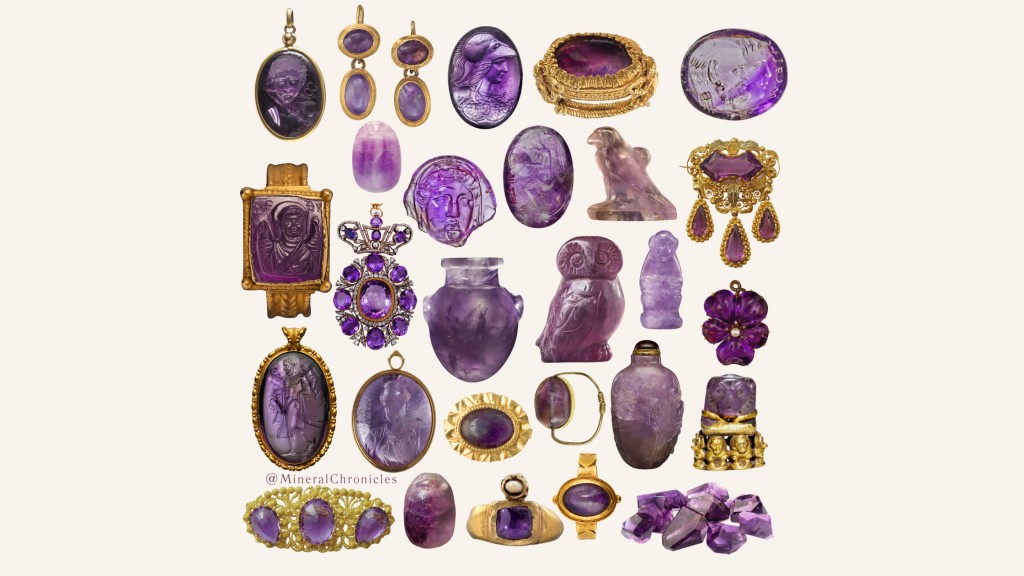
The purple gemstone amethyst has fascinated humans for millennia, inspiring myths and legends across cultures. Its rich hue has long symbolised wealth and power, earning a place among the treasures of kings and queens. Let’s explore the journey of this captivating stone, from its origins deep within the Earth to royal treasures.
Geological Origins
The formation of an amethyst takes millions of years. They develop inside geodes, which are hollow cavities within volcanic rocks. These cavities began as gas bubbles trapped in lava. Over time, hydrothermal fluids rich in silica seep into the cavities. They slowly crystallise along the inner walls, forming layers of purple quartz crystals. This process creates an amethyst geode. Some of the largest amethyst geodes in Brazil and Uruguay are so big that a person can stand inside them.
Ancient Egypt
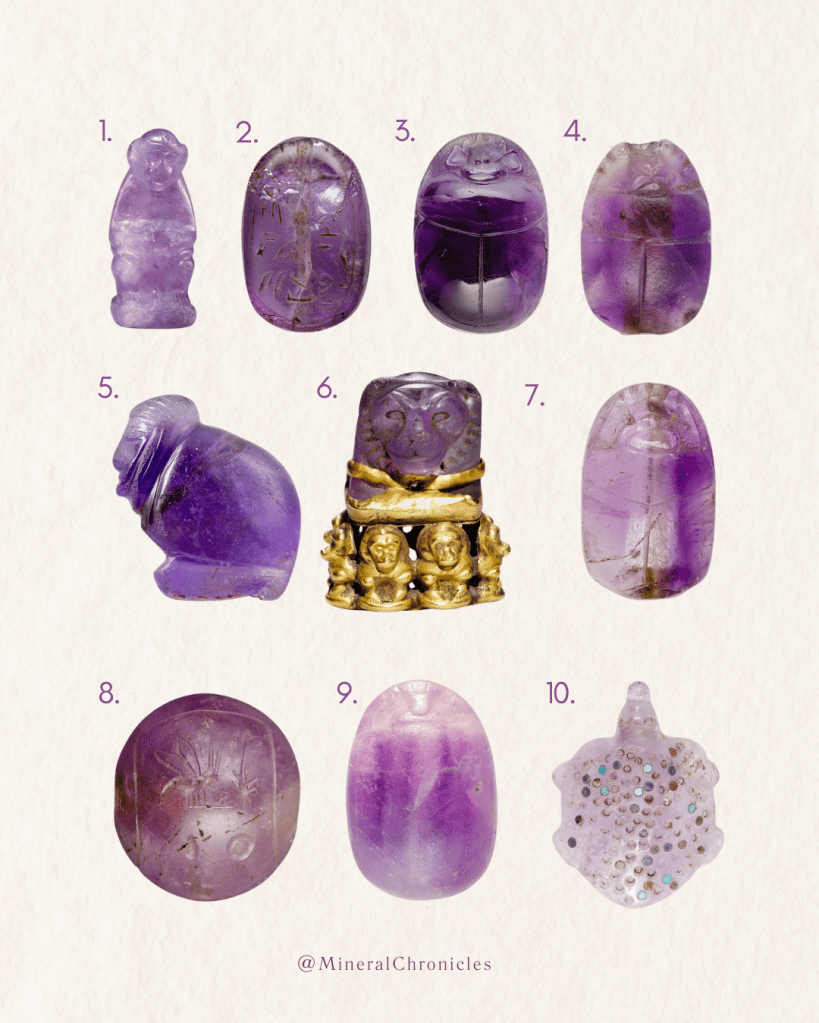
Amethyst was a prized gemstone in ancient Egypt, often carved into amulets shaped as animals, especially scarabs. These amulets offered protection and were worn by both the living and the dead. Famous examples include King Tutankhamun’s amethyst scarab bracelet (egypt-museum.com).
Greco-Roman Period
The Greeks believed that amethyst could protect against drunkenness. The very name amethyst comes from the Greek amethystos, meaning “not drunken.” For this reason, the stone was often worn as jewellery or carved into engraved gems as a charm against overindulgence.
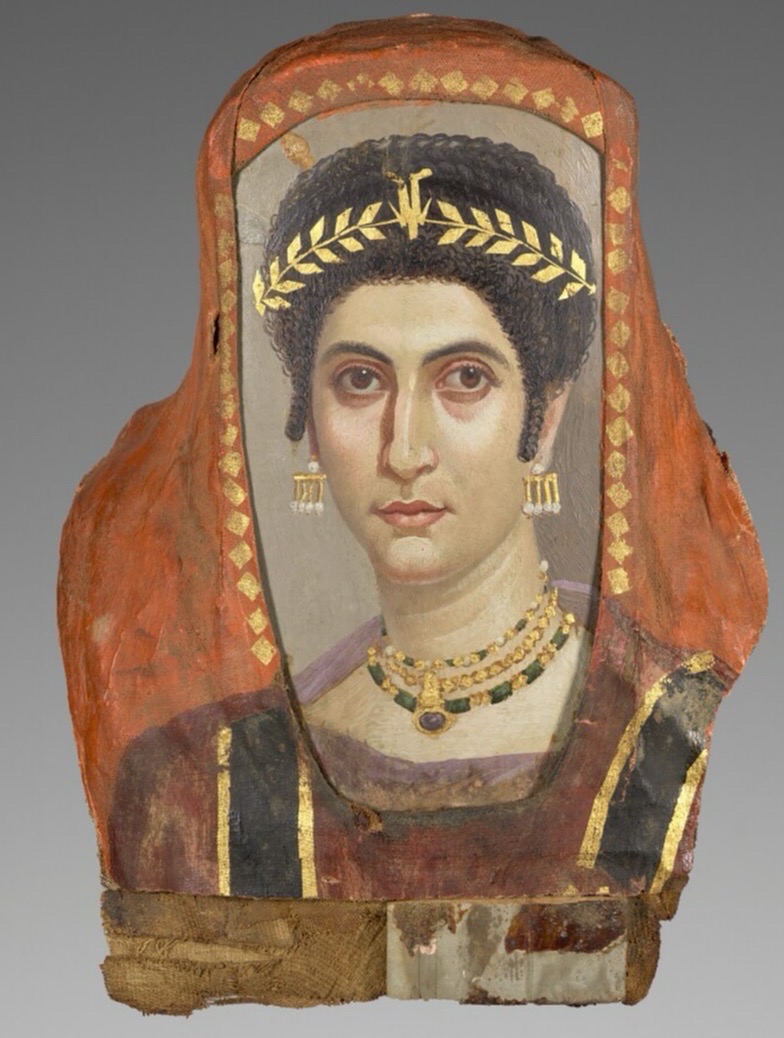
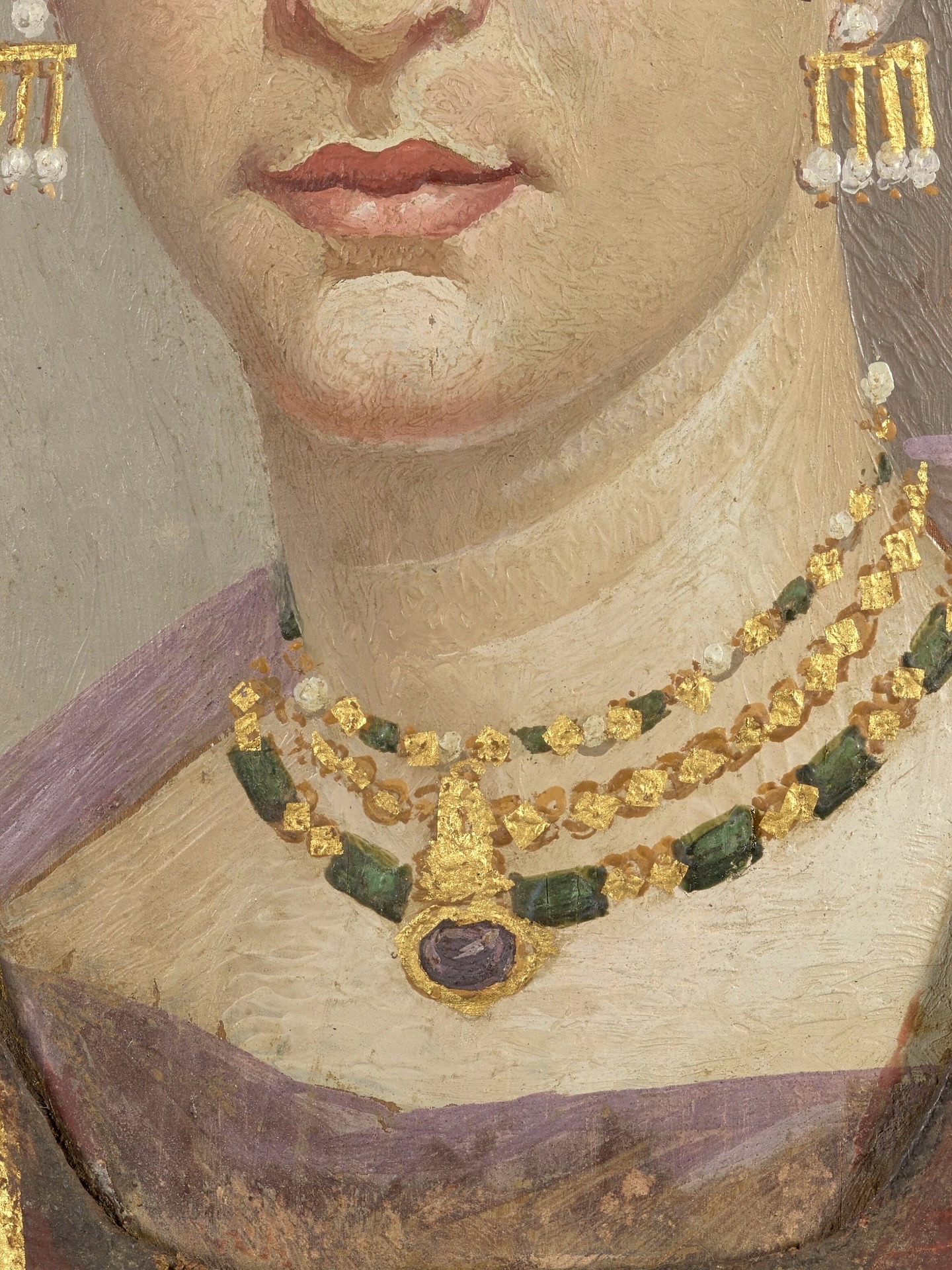
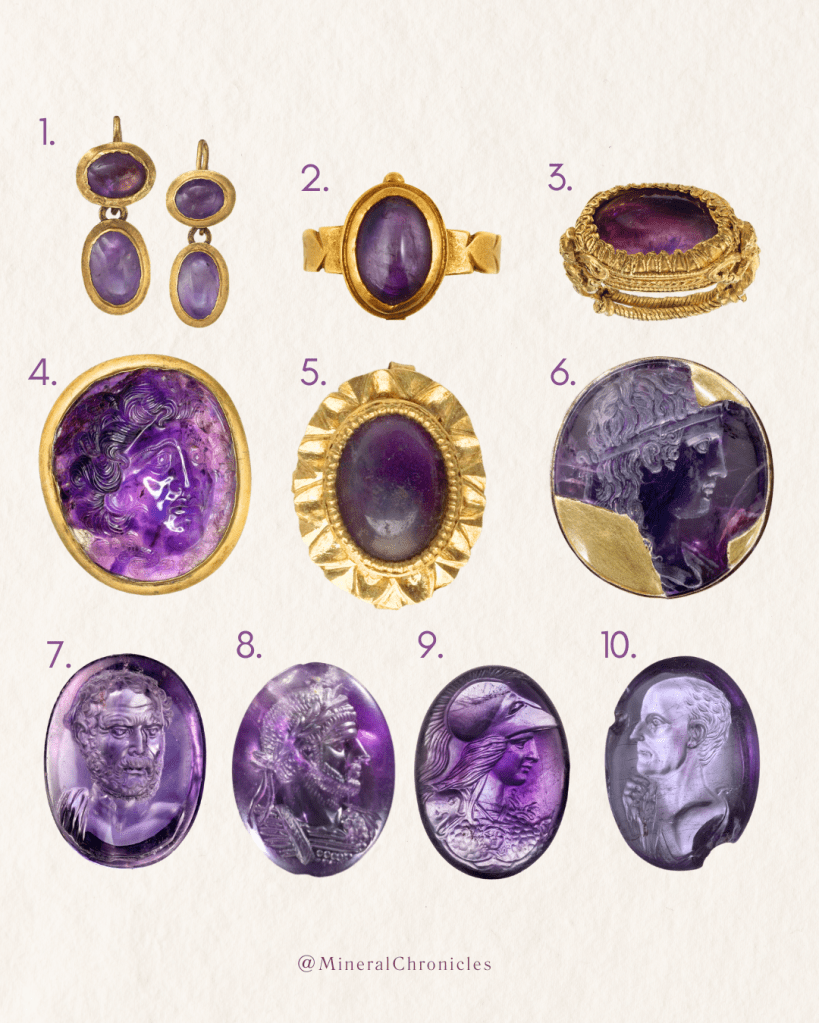
The Romans continued the tradition, favouring amethyst in rings, cameos, and intaglios. Portraits of emperors, gods, and mythological figures were especially popular, and the gem became a fashionable choice among the Roman elite.
The Renaissance
During the Renaissance, amethyst was admired for its spiritual and magical properties. Leonardo da Vinci famously wrote: “amethyst dissipates evil thoughts and quickens the intelligence.” This reflected the widespread belief in its power to inspire clarity and creativity.
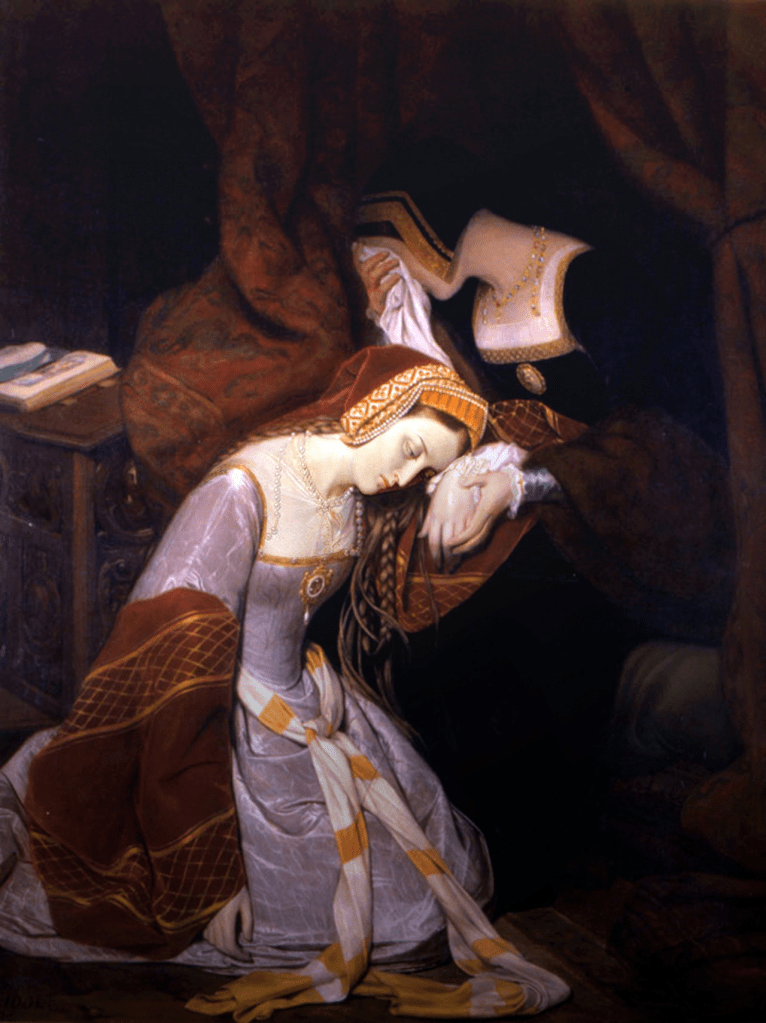
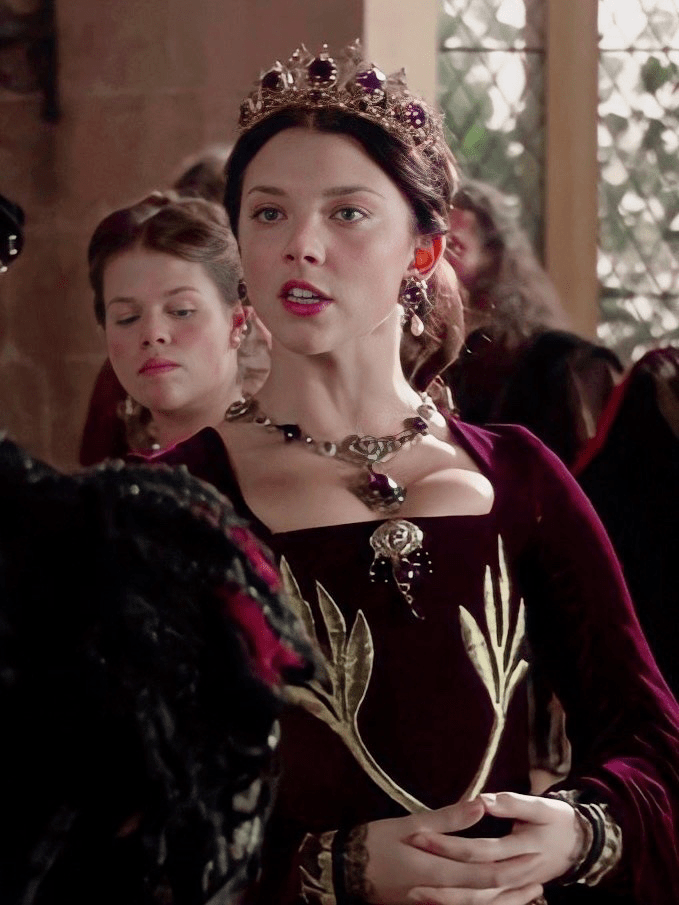
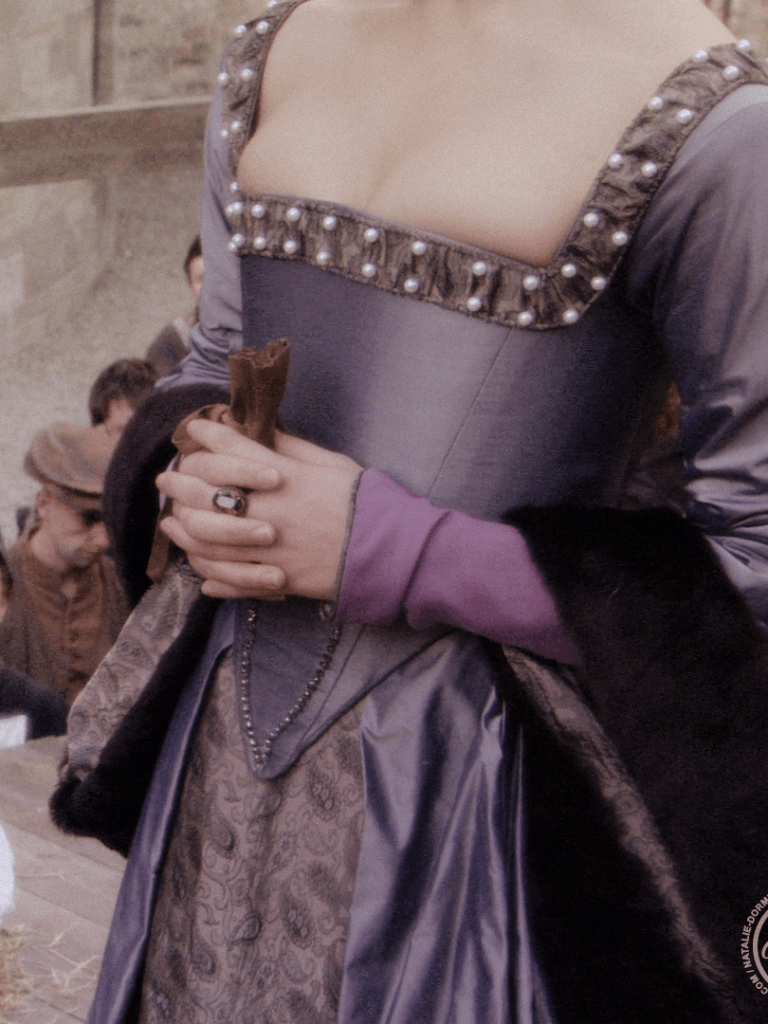
Amethyst was also associated with royalty. Royal figures, such as Anne Boleyn, are often depicted wearing purple, incorporating amethyst, in Victorian paintings and modern screen portrayals.
The Qing Dynasty, China
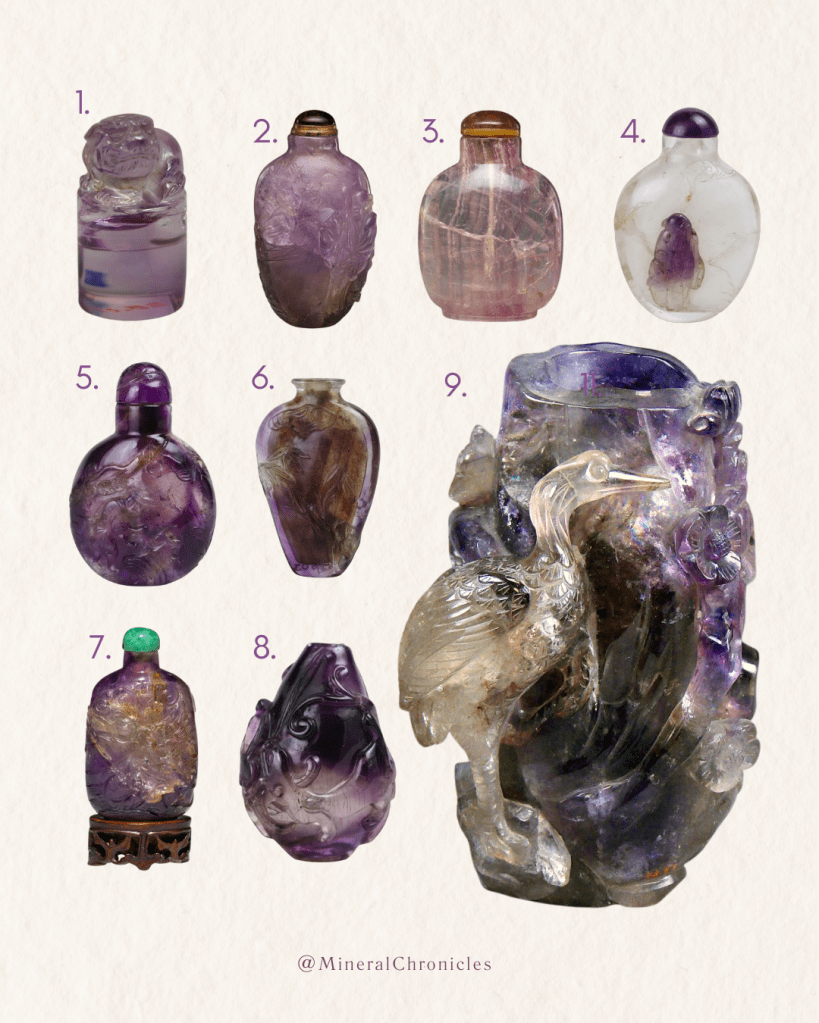
Amethyst was carved into many objects during the Qing Dynasty, including seals, cups, and decorative figures. One special use was the snuff bottle. These were small containers for powdered tobacco, popular with the elite in the 17th and 18th centuries.
The 19th century, Europe
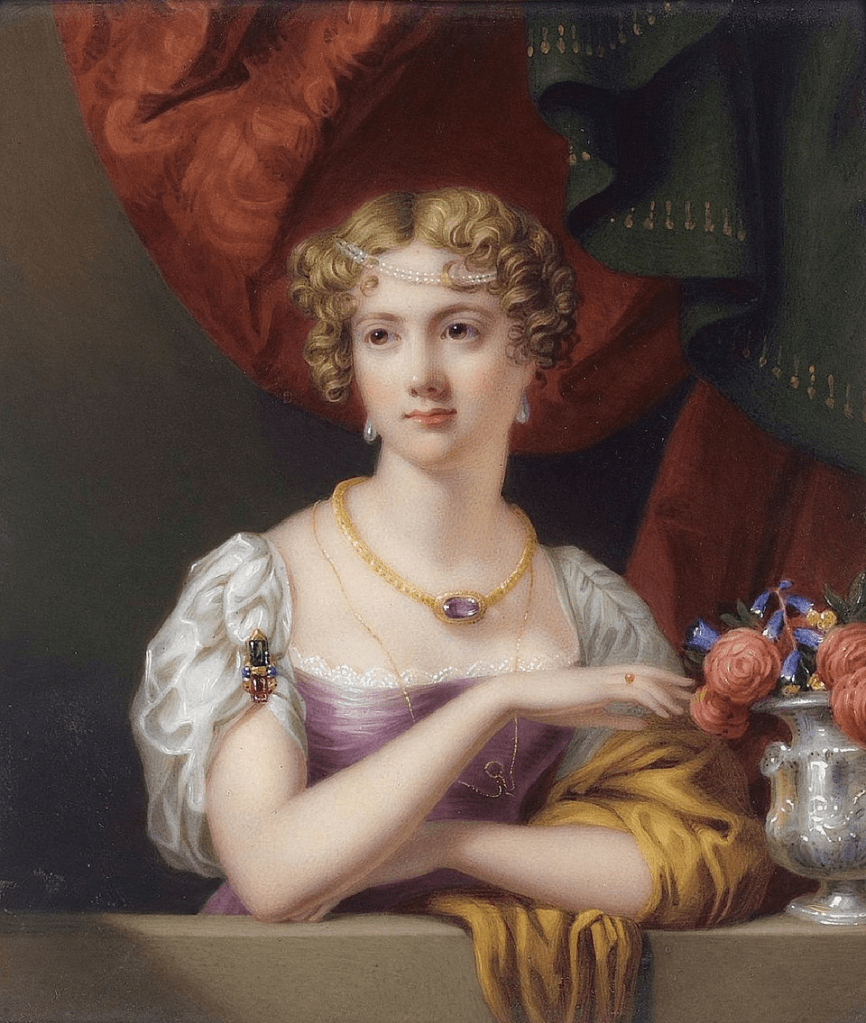
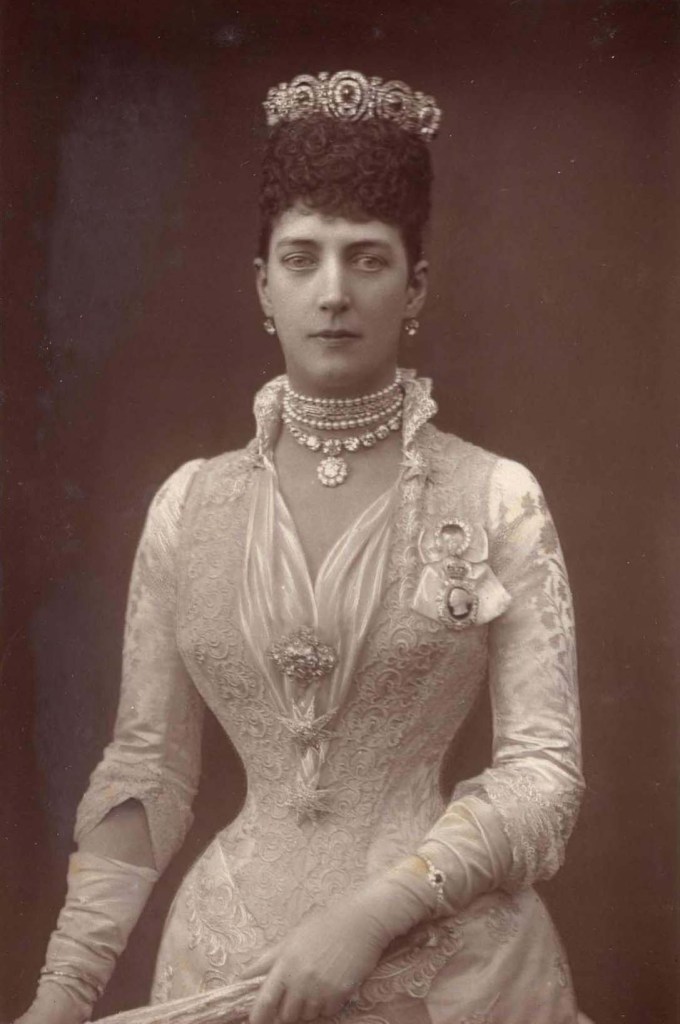
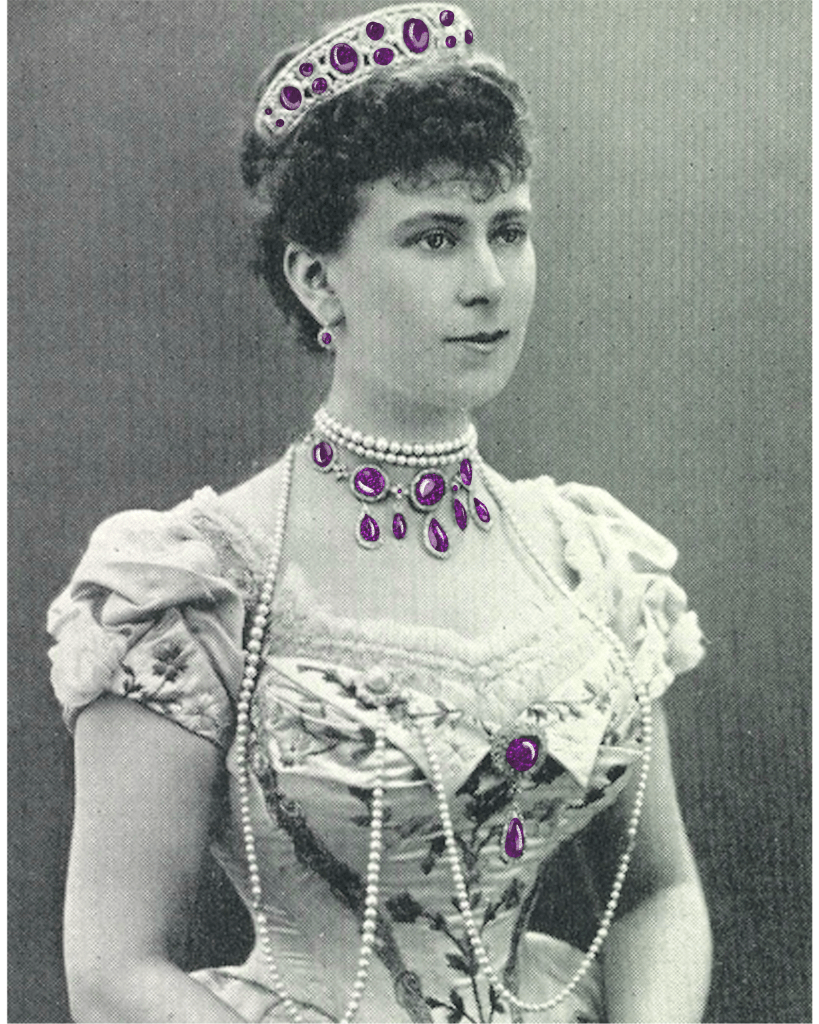
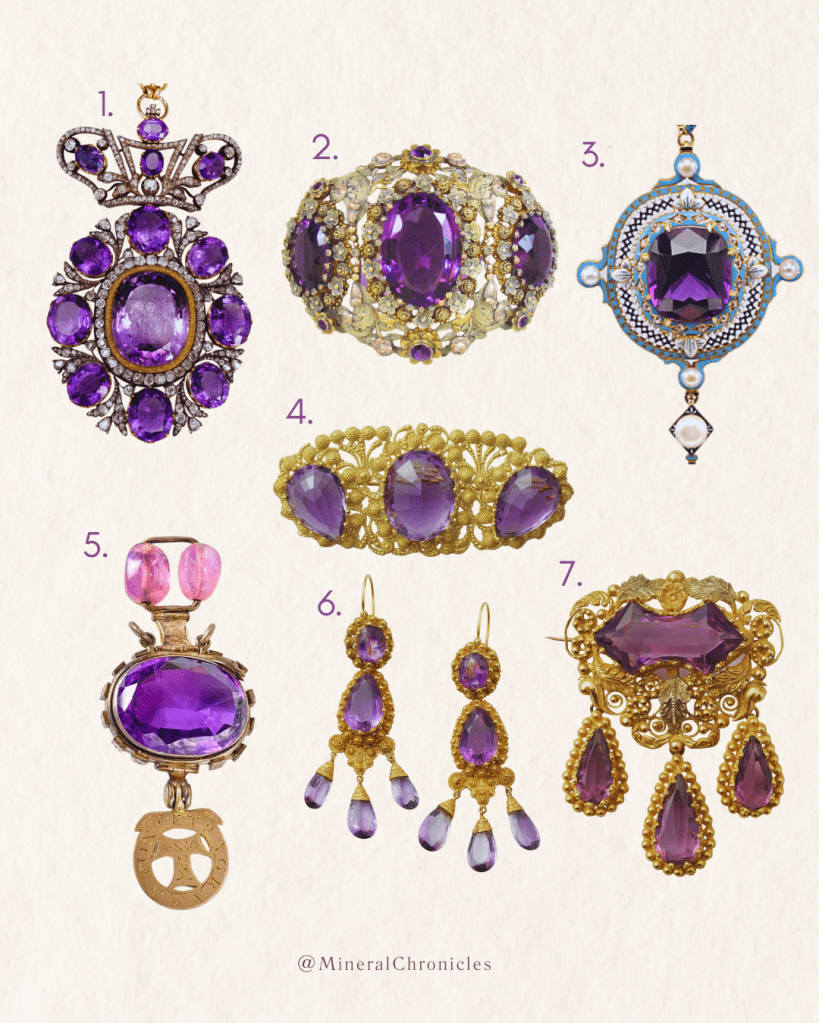
During the 19th century, amethyst was a popular gemstone. It was often set into brooches, pendants, earrings, and tiaras, in elaborate Victorian designs.
One of the most iconic pieces of this period is the “Cursed Amethyst,” better known as the “Delhi Sapphire.” Despite its name, it is a violet amethyst. Legend claims it was stolen during the Indian Rebellion of 1857 and brought misfortune to its owners. The tale of the cursed amethyst was actually created by Edward Heron-Allen to help sell his book, not based on historical fact.
The 20th century
Amethyst continued to be a popular gemstone throughout the 20th century. Mining expanded significantly during this time, especially in Brazil and Uruguay, making the stone more widely available than ever before.
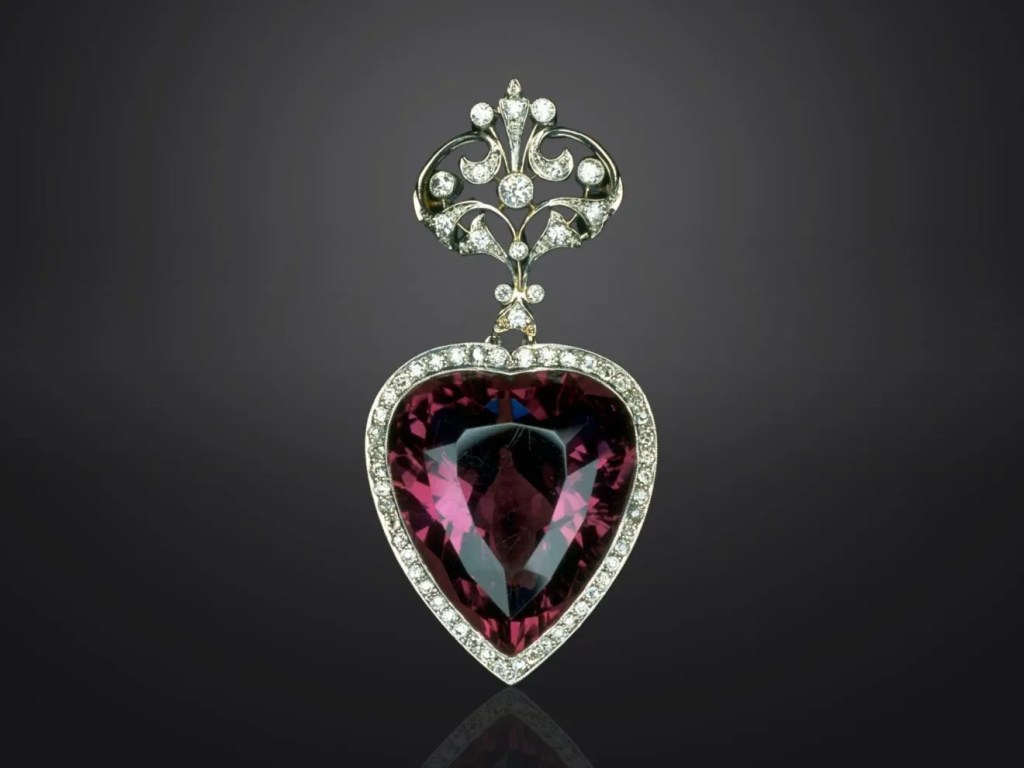
The Morris Amethyst Brooch (1901–1910) is an iconic piece from the Edwardian period. It showcases a 96-carat heart-shaped amethyst, encircled by diamonds.
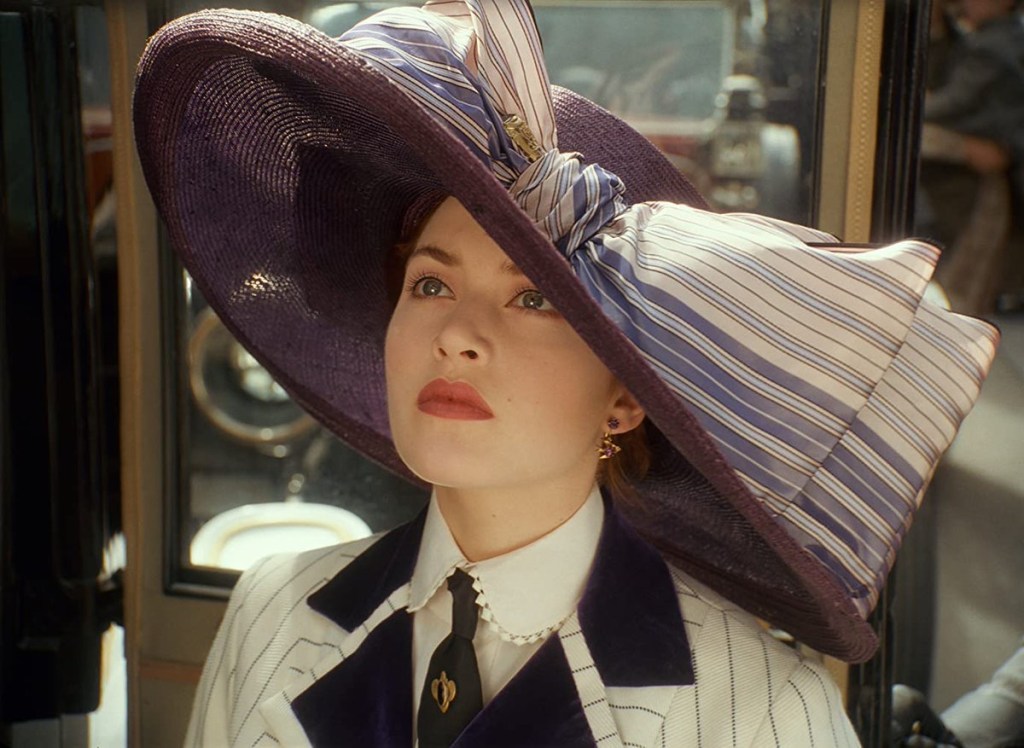
Edwardian amethyst also appears in James Cameron’s Titanic (1997). The character Rose wears an elegant jewellery set styled after 1912 fashion, highlighting the gemstone’s link to luxury.
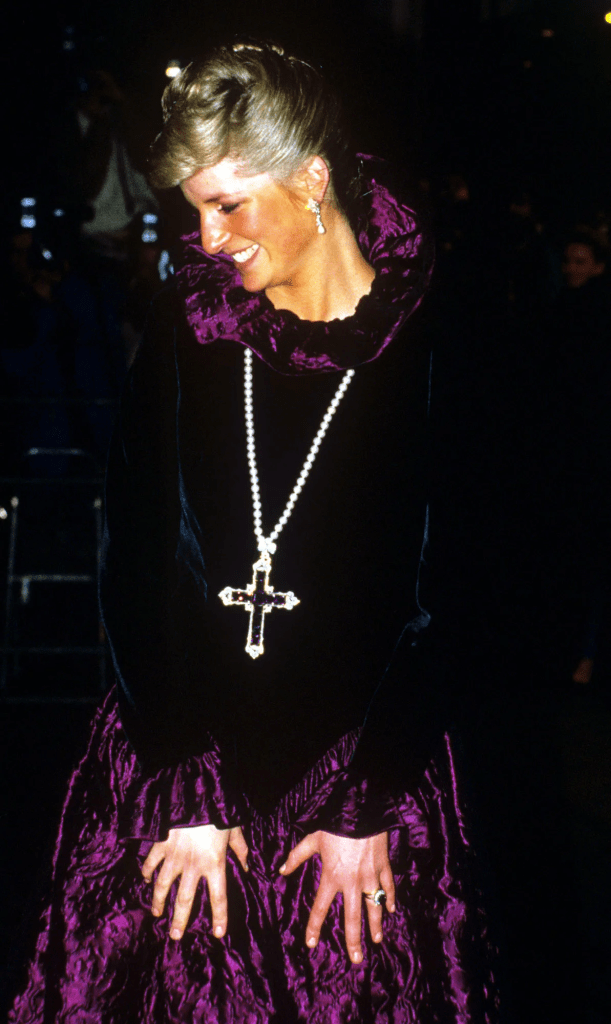
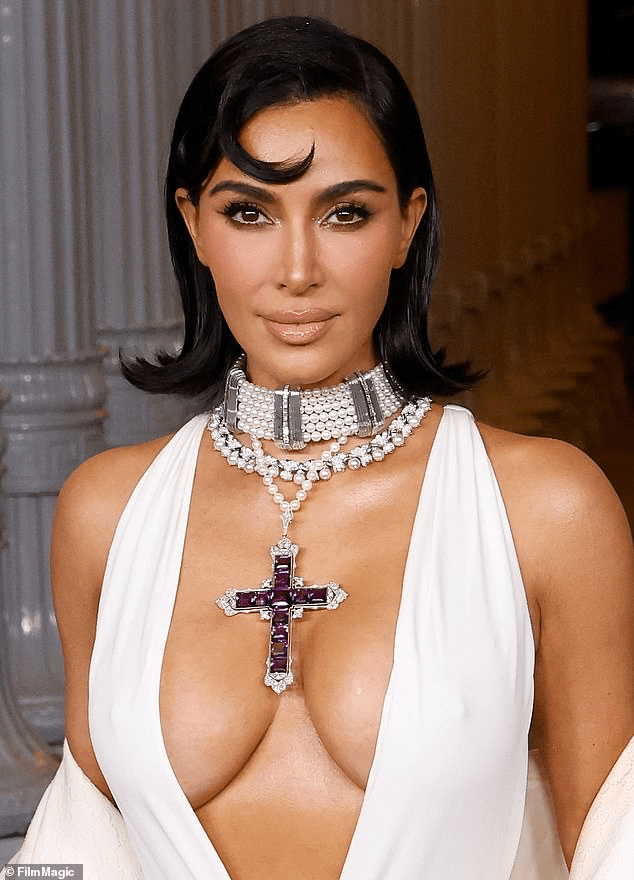
Another iconic amethyst piece is the Attallah Cross. Designed by Garrard & Co. in the 1920s, it showcases a bold arrangement of amethysts and diamonds. It was famously worn by Princess Diana and was purchased at Sotheby’s in 2023 by Kim Kardashian.
Conclusion
Through history, amethyst’s rich purple colour has symbolised royalty, power, and spiritual insight. It was carved into amulets, pendants, brooches, and tiaras. These pieces adorned pharaohs, Roman elites, Renaissance monarchs, and Victorian aristocracy. Today, although amethyst is more accessible and affordable, it is still a popular gemstone. It remains treasured by mineral lovers, gem enthusiasts, and anyone captivated by its beauty.

 Mineral Chronicles
Leave a comment