
It is the rock that revealed the secrets of radioactivity, powered the rise of nuclear energy, and even changed the course of history with its connection to atomic weapons. This article gives a brief insight into uraninite, exploring its key properties, historical discoveries, and some of the most fascinating facts about this deadly yet revolutionary mineral.
What is Uraninite?
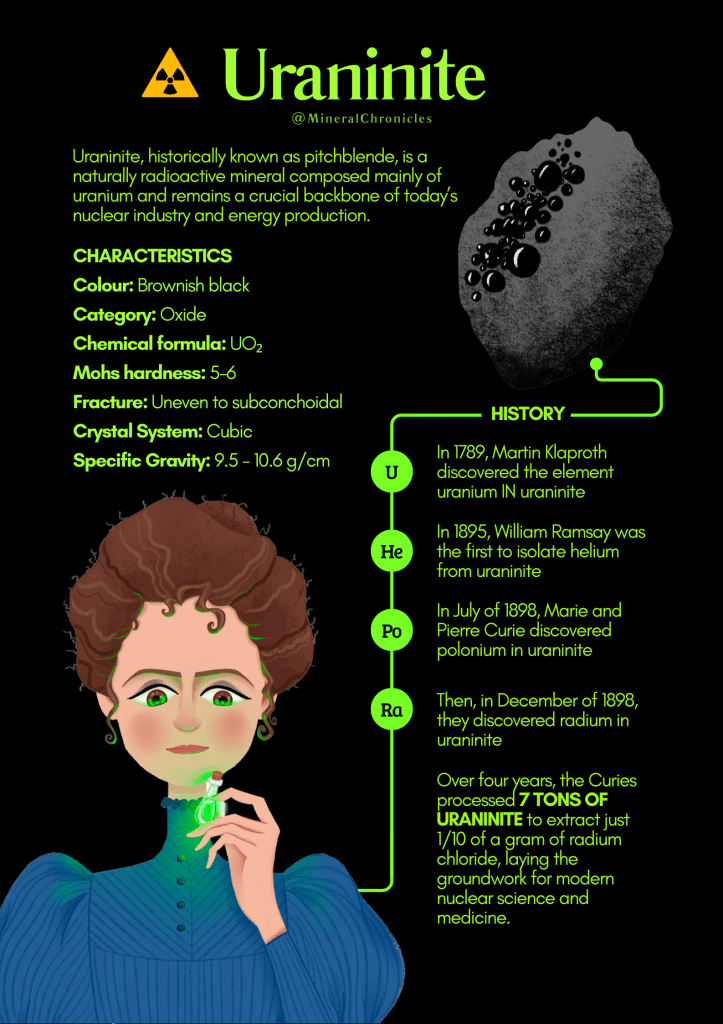
Uraninite, historically known as pitchblende, is a naturally radioactive mineral composed mainly of uranium. It is typically black or dark brown in colour and has an exceptionally high density, making it one of the heaviest naturally occurring minerals.
As the principal source of uranium, uraninite is the most important ore for uranium extraction worldwide. Significant deposits are located in Canada, Kazakhstan, Australia, and Namibia, where it is mined to supply the nuclear industry.
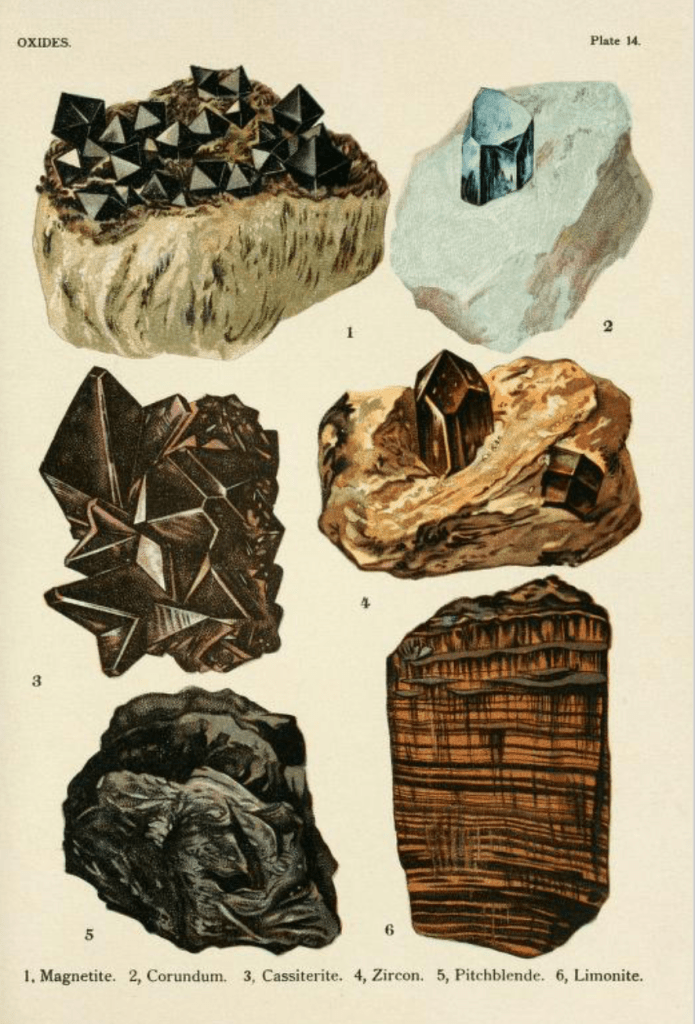
The old name “Pitchblende” comes from the German “Pechblende”, with “pech” referring to its black, sticky appearance, and “blende” used in mining to describe minerals that looked shiny, such as Zinkblende or Manganblende.
A Constantly Changing Composition
Uraninite has an ideal chemical composition of UO₂; however, its overall composition is more complex due to the natural radioactivity of uranium. Uranium is in a constant state of radioactive decay, producing elements such as radium and the radioactive gas radon. These decay products are themselves unstable and continue to decay into a cascade of other elements, including polonium and lead.
In addition to these decay products, Uraninite often contains other elements such as helium, thorium, and rare earth elements, which are not part of the radioactive decay chain.
A Source of Elemental Discoveries
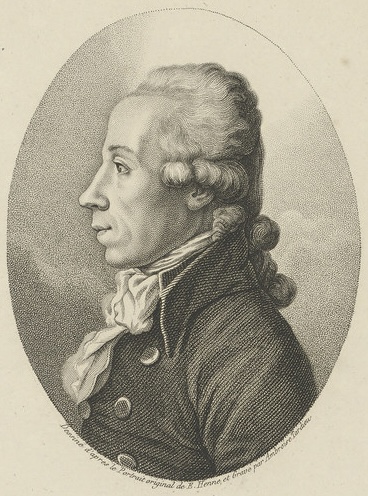
- 1789: Martin Klaproth discovered the element uranium (U) from Uraninite and named it after the planet Uranus.
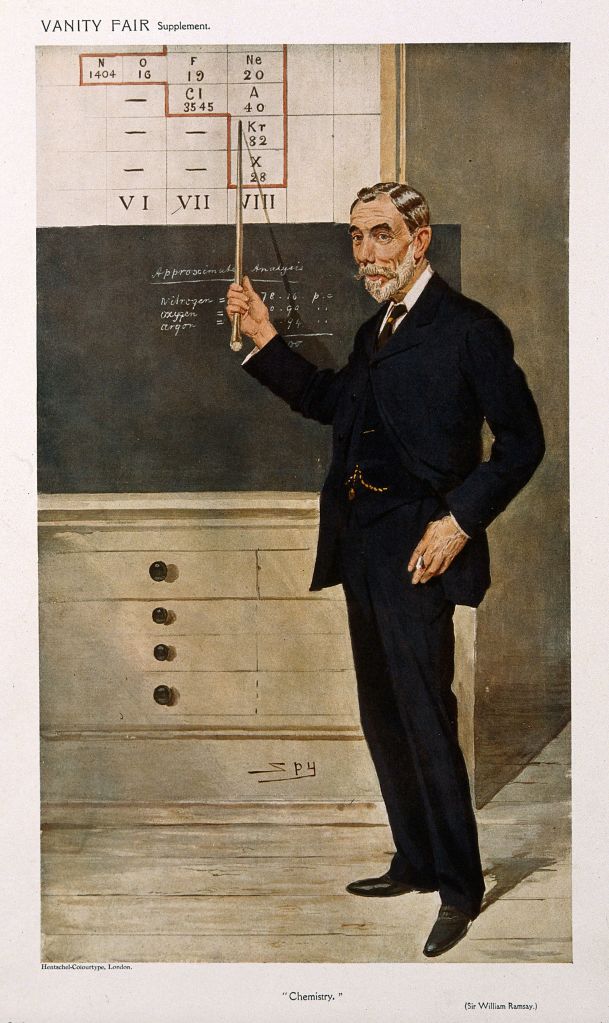
- 1895: William Ramsay was the first to isolate helium (He) from Uraninite.
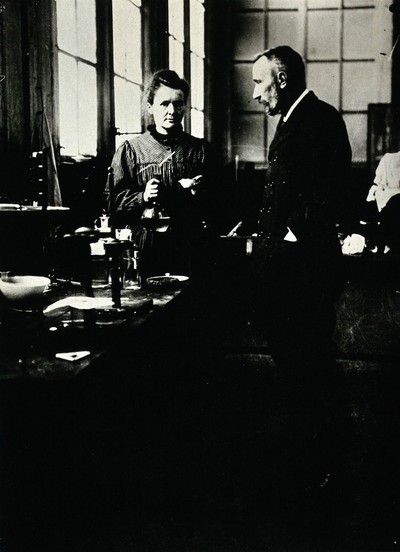
- 1898: Marie and Pierre Curie discovered polonium (Po) and radium (Ra).
A Revolutionary Discovery
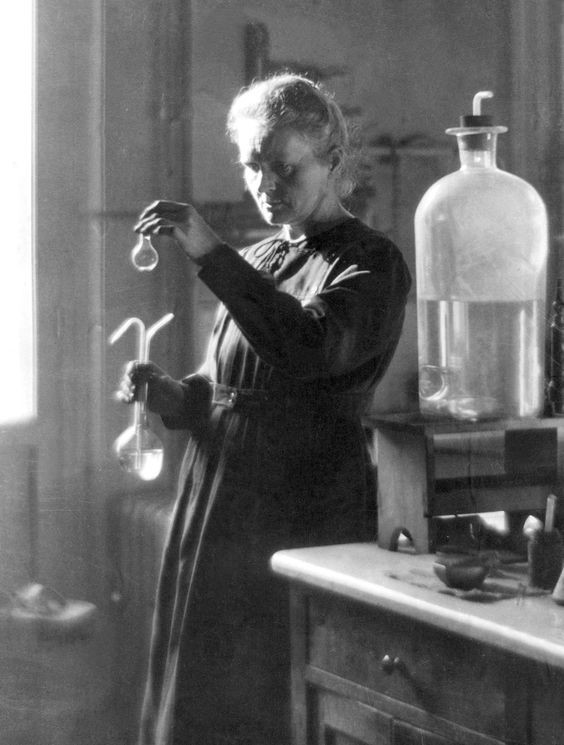
Marie Curie’s work on radioactivity began in 1896, following Henri Becquerel’s discovery of natural radiation. While studying Uraninite, she and Pierre Curie noticed that the mineral was far more radioactive than uranium alone. This unexpected result suggested the presence of unknown radioactive elements. In 1898, their research confirmed this idea and led to the discovery of polonium (Po) and radium (Ra).
The Curies set out to isolate the newly discovered radium from Uraninite, a project that took four years of intense labor. They treated 7 tons of Uraninite, to obtain just 1/10 of a gram of radium chloride in 1902.
These discoveries helped lay the foundation for modern physics, nuclear science, and radiation-based medical treatments still used today.
Marie Curie’s remains were so radioactive that she was buried in a lead-lined coffin. To this day, her laboratory notebooks and personal belongings are still radioactive and are stored in lead-lined boxes, accessible only under strict safety conditions.
A Very Toxic Mineral
Uraninite poses serious health risks through both radiation and heavy-metal toxicity. These hazards impact the body in several critical ways:
• Lung damage and lung cancer from inhaling uraninite dust and radioactive decay products, a major risk for uranium miners
• Kidney damage caused by uranium’s chemical toxicity as a heavy metal
• DNA and cellular damage from long-term radiation exposure, increasing cancer risk
• Blood and bone marrow disorders, including anemia, documented in both exposed miners and early radiation researchers such as Marie Curie
• Chronic respiratory diseases linked to prolonged exposure in poorly ventilated mining
These health dangers reveal only part of the mineral’s impact. Once uranium is extracted and refined from uraninite, its atomic instability can release extraordinary amounts of energy. In the twentieth century, this same property that advanced medicine and physics also enabled the development of nuclear weapons, demonstrating how a dark mineral pulled from the Earth could reshape global history.
Uraninite Today
Today, uraninite remains the basis of the global nuclear industry. It is the primary source of uranium, fueling nuclear power plants, research reactors, and, in enriched form, nuclear weapons. Beyond its role in energy and defense, uranium from uraninite continues to advance science, from radiometric dating to medical and technological applications, proving that this dark, dense mineral still shapes the modern world.
Infographic: Key Facts About Uraninite
References
- Abergel, R., Aris, J., Bolch, W.E., Dewji, S.A., Golden, A., Hooper, D.A., Margot, D., Menker, C.G., Paunesku, T., Schaue, D., & Woloschak, G.E. (2022). The enduring legacy of Marie Curie: Impacts of radium in 21st century radiological and medical sciences. International Journal of Radiation Biology, 98(3), 267–275. https://doi.org/10.1080/09553002.2022.2027542
- Coursey, B.M. (2017). A reflection on the 150th anniversary of the birth of Marie Curie. Applied Radiation and Isotopes, 130, 280–284. https://doi.org/10.1016/j.apradiso.2017.10.028
- Gelfort, E. (1994). Pechblende — ein schicksalhaftes Mineral des Erzgebirges. In F. Naumann (Ed.), Georgius Agricola, 500 Jahre (pp. 131–145). Birkhäuser, Basel. https://doi.org/10.1007/978-3-0348-7159-4_11
- Mining Technology. (n.d.). Ten largest uranium mines. Retrieved February 11, 2026, from https://www.mining-technology.com/marketdata/ten-largest-uraniums-mines/?cf-view
- Wesch, H., Wiethege, T., Spiethoff, A., Wegener, K., Muller, K.-M., & Mehlhorn, J. (1999). German uranium miner study — historical background and available histopathological material. Radiation Research, 152(Supplement), S48–S51.
Image Credits: All images not otherwise credited are public domain. Drawings and infographic created by the author.

 Mineral Chronicles
Leave a comment