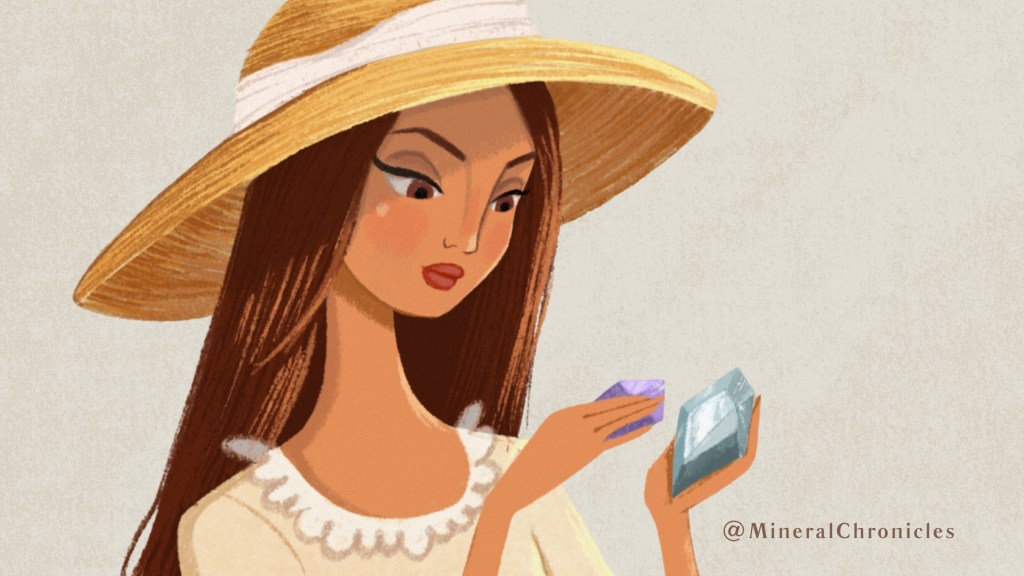
Ever picked up an unknown mineral and wondered what it’s made of? Geologists ask that same question every day. To identify a mineral, geologists look at several characteristics that act as pieces of a puzzle. These characteristics include the mineral’s colour, lustre, streak, density, and even its taste. In this article, we focus on one of the most practical indicators: the hardness of a mineral.
1. What Is the Mohs Scale of Hardness?
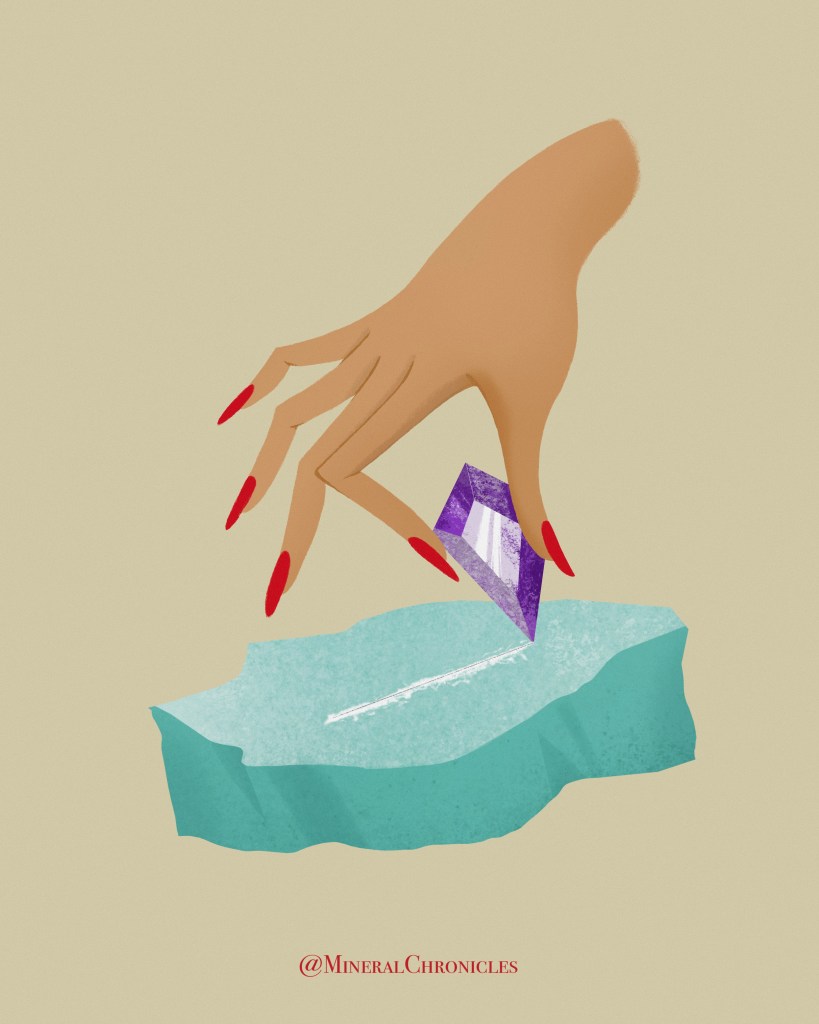
The Mohs Scale of Hardness is a simple test used to help identify a mineral. The scale is based on a straightforward comparison: a harder mineral will scratch a softer one. Minerals are assigned a number from 1 to 10, ranging from the softest to the hardest material.
The 10 Reference Minerals
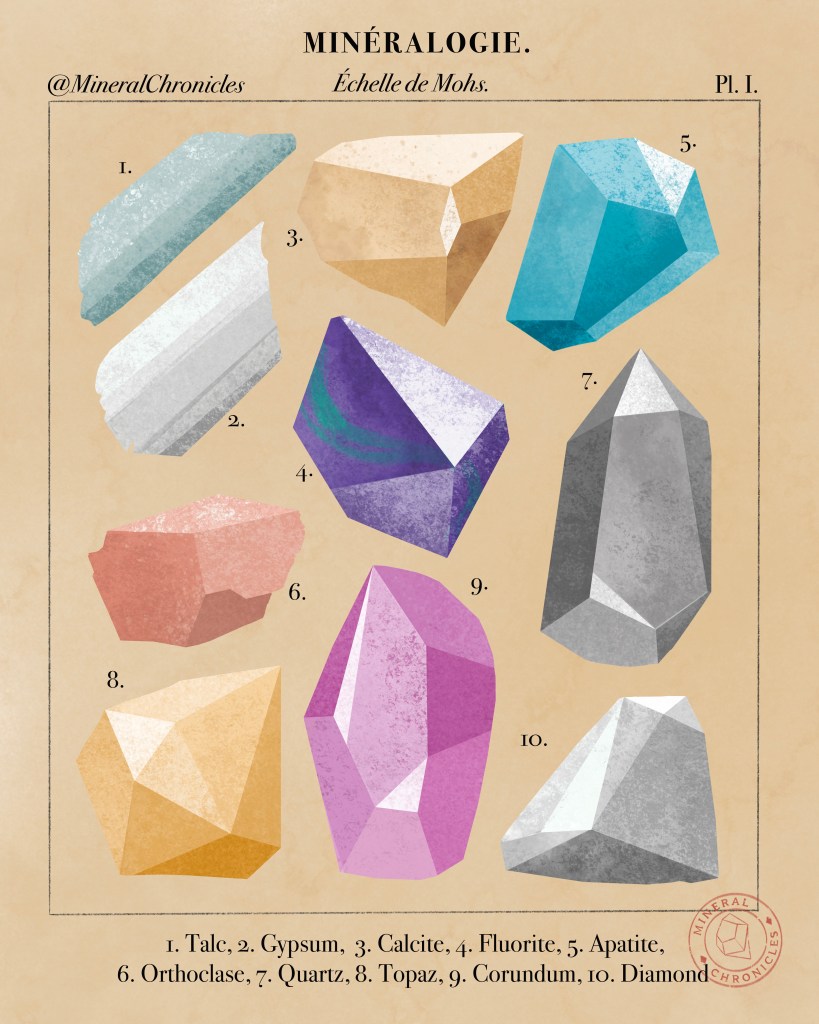
- Talc: Extremely soft; can be easily crumbled.
- Gypsum: Easily scratched by a human fingernail.
- Calcite: Can be scratched with a copper coin.
- Fluorite: Can be scratched with a steel knife.
- Apatite: Can be scratched with window glass.
- Orthoclase: Scratches glass; cannot scratch steel.
- Quartz: Scratches glass and steel.
- Topaz: Considered a hard, resistant mineral.
- Corundum: Second-hardest natural mineral; only diamond ranks higher.
- Diamond: The hardest naturally occurring mineral; only another diamond can scratch it.
Everyday Hardness References
Even without a Mohs test kit, common objects provide useful hardness comparisons:
2.5. Human fingernail: Can scratch gypsum but not calcite.
3.5. Copper coin: Can scratch calcite but not fluorite.
5.5. Window glass: Can scratch apatite but not orthoclase.
6.5. Steel knife blade: Can scratch orthoclase but not quartz.
2. Friedrich Mohs: The Man Behind the Scale
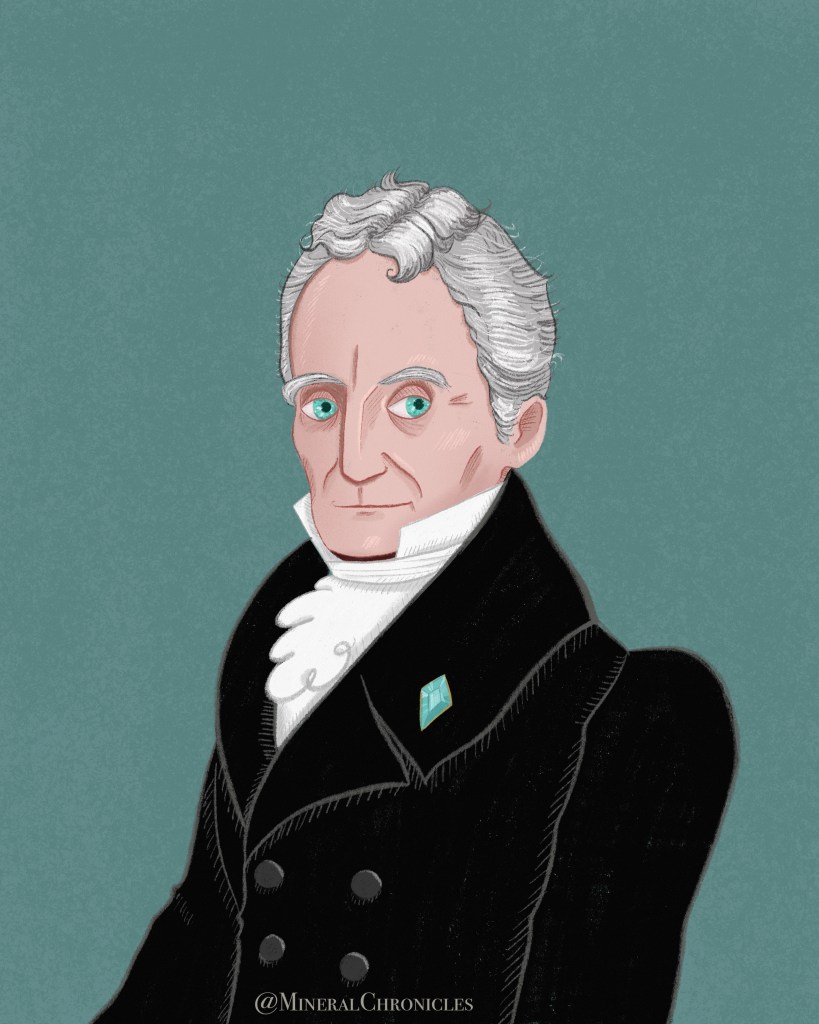
Carl Friedrich Christian Mohs (1773–1839) was a German mineralogist best known for developing the Mohs Hardness Scale. Mohs served as Professor of Mineralogy at the Mining Academy of Freiberg and at the University of Vienna.
In 1812, he was appointed the first curator of the mineral collection and the first Professor of Mineralogy at the Joanneum in Graz, Austria. There, he carried out extensive experiments with his students and, around 1815–1816, developed the 10-point hardness scale, ranking minerals from talc (1) to diamond (10) according to their resistance to scratching. The scale was published in his 1822 book Grund-Riss der Mineralogie and quickly became the international standard for measuring mineral hardness.
3. The Iconic Mohs Test Box
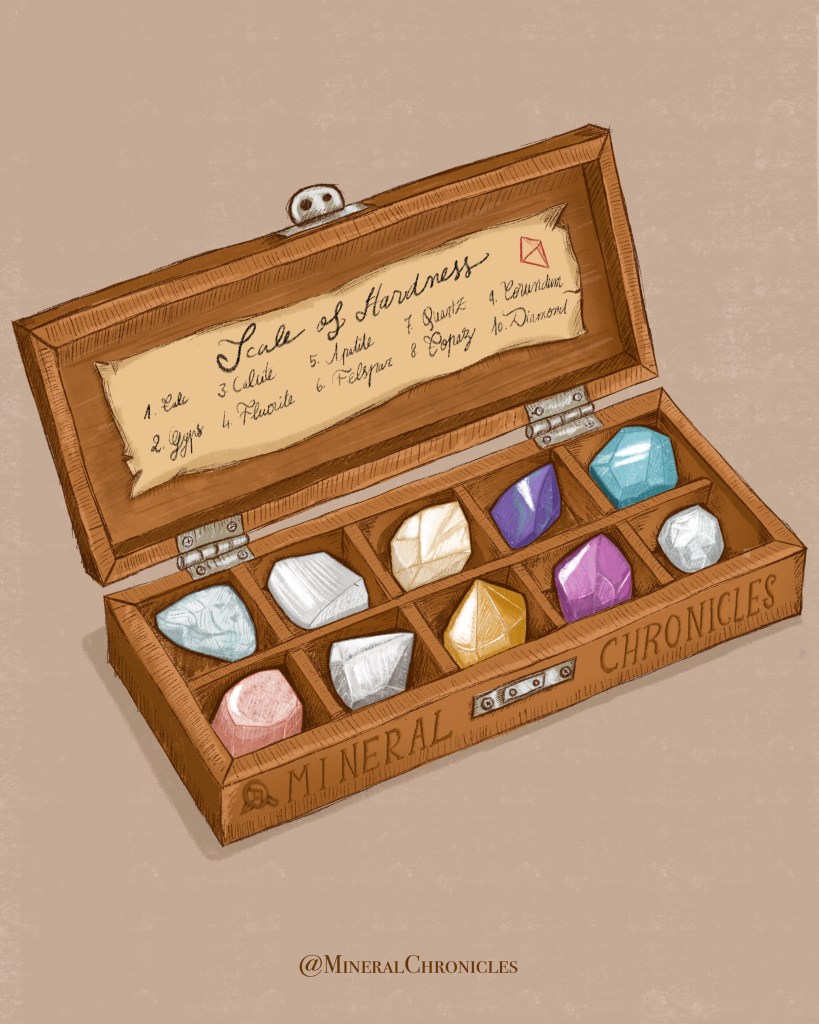
The familiar wooden Mohs test kits appeared in the nineteenth century as geological education and fieldwork became increasingly formalized. The box contains the ten reference minerals arranged in order of hardness, providing a convenient, portable testing kit.
4. Why the Mohs Scale Still Matters

Today, more than 200 years later, the Mohs Hardness Scale remains one of the simplest and most practical tools used by geologists, mineral collectors, gemologists, and jewelers to identify minerals in the field and laboratory.
5. Infographic: Key Facts About the Mohs Scale of Hardness
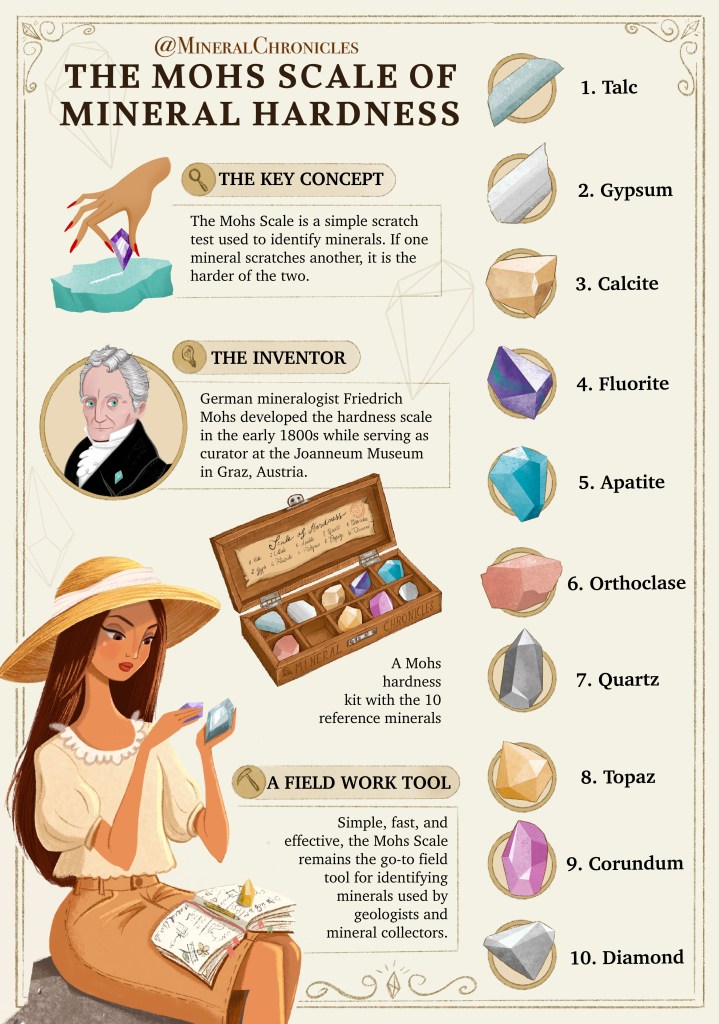
To wrap things up, here’s a quick visual summary of everything we covered in this blog article. I illustrated this infographic entirely by hand in Procreate.
Further Reading
Books:
Bonewitz, Ronald Louis. Rocks and Minerals. DK Publishing, 2012.
Articles & Visual Resources:
Visual Capitalist, Minerals and Gems Ranked by Hardness: https://www.visualcapitalist.com/cp/minerals-and-gems-ranked-by-hardness
Science History Institute, Friedrich Mohs: Scientific Biography : https://www.sciencehistory.org/education/scientific-biographies/friedrich-mohs/


Leave a comment